
Capernaum: Child Parents
Capernaum is a film about an 11 year-old boy (Zain) who, while serving a five year prison sentence, sues his parents for giving birth to him.

Still from film
Capernaum is a film about an 11 year-old boy (Zain) who, while serving a five year prison sentence, sues his parents for giving birth to him. He asks a judge to order that they have no more children. A life of neglect informs his conviction that those who can’t look after children, shouldn’t be allowed to bring them into the world.
A flashback reveals the events that led to Zain’s imprisonment. His mother and father are negligent and so Zain acts as a guardian to his younger sisters. In a touching scene he washes the bloody underwear of his 11 year-old sister Sahar as she experiences her first period which, if not concealed, will likely prelude her premature marriage. Eventually Zain runs away and meets Rahil who is working at a decrepit amusement park. Rahil is an Ethiopian refugee, illegally in Beirut with her infant son, Yonas. Zain moves in with Rahil and when she disappears, Zain again finds himself in a parenting role. Despite his youth, Zain instinctively steps into the shoes of absent parents.
Parenting is a unique responsibility that requires no qualification. Social services may appear when maltreatment is confirmed, but this depends on the country and an assessment often occurs after the child has been plunged into a precarious situation. Zain’s parents are abominable. They run drugs, they make their children work, and they manhandle them. However, through living on the streets caring for Yonas, Zain gets a dose of the ethical struggles that come with parenting in poverty.
The word capernaum is described by director Nadine Labaki, in an interview for the Globe and Mail, as chaos. It is derived from the Hebrew word Kfar Nahum ‘Nahum’s village’, an ancient town in Israel. Over the centuries the town was destroyed and rebuilt continuously. Capernaum came to mean a place with a disorderly accumulation of objects.
The film is set amongst this disorder. The slums are piled high with the inventive logic of the poor making do with the little that they have. A window makes a suitable door, an electrical wire provides a clothes line. Dali’s melting clock would hardly turn heads in this topsy turvy setting. The handheld camera work captures the chaos of Beirut with an urgent sense of scavenging through messy homes, dirty bins and crowds of people.
At times the film seems to prolong these daily scenes of squalor rather than progress the plot-line. A fridge being emptied becomes an event; rotten beans, mouldy pots, and sludgy remnants of decaying food leaves only ice and sugar to fill hungry bellies. However, the cumulation of these slower-paced scenes is deceptively disturbing. They don’t rely on the shock factor of starving children, like a World Vision ad, rather much of the barbarity and abuse in the film is implied. It’s not until the end, after seeing a plethora of mundane scenes of wretched daily life, that the emotional effectiveness of this strategy is felt. Subtle footage is more bearable for the viewer and allows for closer attention to be paid to each injustice, which ultimately provokes a greater empathy than raw ‘shock factor’ could have achieved.
Labaki establishes a hierarchy of victims of the refugee crisis. The children are left to fend for themselves in impossible circumstances. But the parents are victims of their refugee status too. They may be negligent, but are also without the means or prospects to support a family.
This is not simply a sad film. While it may lead to a collection of tears on the chin, these will also be the result of heart-warming moments. Zain doesn’t only fight for his own cause, but speaks as the voice for many children when he reproaches a judge, and all adults, for not protecting them. The film prompts admiration of a little boy’s unwavering resilience, and questions how many of the 631,000 children in Lebanon (estimated by Human Rights Watch) are forced also to live so far beyond the scope of childhood.
To every adolescent error
You’ll be told to say hello to everyone
look them in the eye,
Smiling at a small community - earn your place.
But please don’t tell them everything,
just in case.
You’ll be told to say hello to everyone
look them in the eye,
Smiling at a small community - earn your place.
But please don’t tell them everything,
just in case.
There’ll come a time,
When the whispers will make you cry,
When gossip will flow through the grapevine,
And of course you’ll lie.
Clinging to approval of family and friends,
you’ll scramble to save face.
Your moment will no longer be yours,
As its truth you’ll deny.
And with each lost moment,
you’ll become acutely self-aware,
Doubting your identity,
The one being crippled by community.
Although they’ll eventually forget, for longer
you’ll carry some shame.
Perhaps in years to come,
Of these little blackmails,
You’ll still care.
And it will be you,
Who needs to forgive,
the small place from which you came.

Caitlin Leishman

Say Nothing - Patrick Radden Keefe: A book (reaction)
Upon finishing Patrick Radden Keefe’s ‘Say Nothing’, a work of investigative journalism that pieces together the broken fragments of the “Troubles” in Northern Ireland, I was bursting with a sense of injustice and confusion about whether I was immorally sympathising with terrorists.

Image from book

Image from book
Upon finishing Patrick Radden Keefe’s ‘Say Nothing,’ a work of investigative journalism that pieces together the broken fragments of “ The Troubles” in Northern Ireland, I was bursting with a sense of injustice and confusion about whether I was immorally sympathising with terrorists.
I wanted to google Sinn Féin, get to the bottom of unanswered murders and, and…mostly - I wanted to tell my Dad all about it. To sit down with wine and have him help me thrash out the mess in my mind. I needed to find a moral position on The Troubles that felt just, considering all the atrocities that book unpicks. In fact, by the end of the book, “The Troubles” started to sound a little esoteric and timid, the kind of term that a grandmother might use to gloss over a family member’s indiscretion, that ought not be discussed in public.
Turns out, finding a moral position is not that easy. Say Nothing doesn’t give conclusions as much as it explains many perspectives on the truth of the events. Viewing The Troubles through the eyes of those interviewed, it illustrates how humans can push their minds and bodies to inconceivable limits, how much a cause gives them the will to do so, and how they reckon with their actions when their cause disintegrates.
From the 1960s to 1990s fights occurred simultaneously between the Irish and the British and the Catholics and the Protestants. A certain toughness was embedded in anyone who’d lived through any part of the 30 years of violence. Dolours Price was an attractive young political activist for the Irish Republican Army (IRA). When she recounts being involved in a Catholic peace-protest that marched through several small towns in a bid to end the religious persecutions in Ireland, she was ambushed and pummelled with bricks. Managing to escape, she returned home and told her mother. Her mother responded by asking why she hadn’t fought back. Price’s Aunt Birdie was left blind with no hands after having been blown up by a bomb she was planting before Price was born. She was considered a family hero. The fight was passed down from generation to generation. Parents were proud of their children’s involvement, even if it meant their children risked their lives or wasted away.
Price never had a good relationship with food after hunger striking in a London cell, where she was imprisoned after bombing the Old Bailey Courthouse in 1973. After hunger striking for just over two weeks, she then spent another 167 days being force-fed through a metal device and tube. She was transferred to Armagh prison in Ireland, where she developed anorexia dropping to 33kg before she was hospitalised. Even then her mother didn’t discourage Dolours’ life-threatening crusade - rather she admired her audacity.
The Belfast Project was initiated by a small department within Boston College whose mission was to preserve a complete collection of accounts from The Troubles. They conducted covert interviews with ex-IRA members who risked arrest from the police or death for betraying the IRA, should the interviews become public. The Belfast Project was a reassuring thought. Perhaps all this destruction would amount to something meaningful for future generations to learn from. For participants, who could tell their version of truth, the interviews were a means of confronting their past actions. While not condoning violence, it felt reasonable to sympathise with many of those involved, at times to even fall into step barracking for them. Reading these accounts of The Troubles, it became a struggle to maintain sight of the moral high-ground as sympathy seeped in.
There were only two people for whom I could not garner an ounce of sympathy. Rather, it was a relief to be able to place the blame squarely on -Margaret Thatcher (Prime Minister of the United Kingdom) and Gerry Adams (Leader of the IRA) - Although neither of their perspectives was included in the book, both Thatcher and Adams appear puppet-masters. They controlled others according to their political strategies and both seemed willing to throw their loyal followers under the bus if need be.
At the time the British Army was using severe methods of ‘enhanced interrogation’ that were developed by a British Officer, Frank Kitson, while he was based in Africa. His techniques were used again on suspected IRA members. In 1972 a peaceful march was held against these interrogation methods and internment without trial. British soldiers shot 26 unarmed Irish civilians at the Bogside Massacre, aka the Bloody Sunday of which U2’s Bono sings. In 1978 the European Court of Human Rights decided that the techniques, while degrading and inhuman, didn’t amount to torture. This ruling opened the doors for President Bush to use them at Guantanamo Bay years later. Aside from the torture and the shooting of civilians, the British army was also running informants within the IRA. Some had been informants living dual lives for decades, and had been promoted to key IRA positions. These positions often meant they were involved in violence. A British officer spoke with Thatcher about his concern that the British were effectively permitting mass murder. She ordered them to keep doing what they were doing, and not discuss those details with her.
Gerry Adams seems to be the founder of Fake News, answering sticky media questions about his IRA involvement with a hollow denial. As a leader of the IRA, the politician was known never to put himself in a compromising position, rather let others do his dirty work. He orchestrated operations and inspired recruits. When it didn’t suit him to be a part of the IRA publicly, he took the - now tried and tested - politically successful approach of simply denying the obvious.
Rick O’Rave, a participant in The Belfast Project summarises the intelligence and ruthlessness of Adams’ personality,’…anyone capable of playing such a long and calculating game and dispatching six men to an unnecessary death must be a genius of political strategy - but also a sociopath.’ This recollection refers to Adams declining an offer that would have saved six hunger strikers. The six deaths would lead to anger and increased support for the IRA - politically, it served him if they died.
The Guardian printed in February of this year that Drew Harris, (Garda Commissioner and former Senior Officer of the Police Services of Northern Ireland), agreed that the IRA Council still oversees the Sinn Féin Party. Sinn Féin reportedly supported the marriage equality bill and to legalise abortion. They stand against anti-immigrant policies and prioritise addressing the housing crisis, all policies of a party that might be fairly reasonable to support, were it not for this large question mark over its past. Although the party denies that it is overseen by the IRA, The Guardian also reported that Gerry Adams was, secretly, put on the negotiating panel this year as Sinn Féin attempted to form a government with political party Fianna Fáil.
War was never declared, but there was violence for 30 years. The fight was subversive with ulterior motives, creating an environment where no one could be trusted. Yet so many acted in blind faith. The participants of the IRA were strong-willed, the hunger strikers one extreme example. Despite their resolve one can’t help but feel they were all exploited.
When the cause that so many risked their lives for (and took lives in the name of) just fizzles out…where does that anger go? When so many still have their own secret history associated with The Troubles - one that if revealed still risks punishment - how can the cloud of mystery ever be lifted?
Say Nothing educates through the eyes of others, and the more information it gives, the more questions it creates. What kind of justice could possibly bring closure to such a twisted set of tragedies? To all those who still have unanswered questions - would the truth even be enough - or would it only be painful? In any case the whole truth is unlikely to ever come out, because there will always be witnesses who believe silence is their only option and so they will continue to say nothing.

Folklore: The sui generis nature of a superstitious Iceland
Scientifically they are charged particles trapped in the Earth’s magnetic field. Mystically, they are the Northern lights. Iceland is a country where natural wonders are abundant. Volcanic islands sit on standby beside the mainland, remnants of lava formations create oddly rippled mountain ranges and blue lagoons beckon.
Scientifically they are charged particles trapped in the Earth’s magnetic field. Mystically, they are the Northern lights. Iceland is a country where natural wonders are abundant. Volcanic islands sit on standby beside the mainland, remnants of lava formations create oddly rippled mountain ranges and blue lagoons beckon.
Iceland is an ecosystem with a visible pulse and a bipolar personality. It is so unpredictable in its beauty and bizarreness that a seductive view can quickly become life threatening. In 2017 a tourist fell off a cliff while hiking in the notoriously gnarled highlands. Another tourist, in the same month, fell from a mountain after veering off the official track. Considering both its beauty and danger, it is a landscape that is so revered by its local people that it has been the ideal setting to breed belief in the supernatural. Uniquely, Icelandic supernatural beliefs are connected to environmental phenomena, rather than to people. This avoids the inhuman acts that superstition can otherwise cause between humans.
Since the twelfth century, Icelandic folklore has acted as a kind of mystical guide passed down to children so that they have the know-how to survive the treacherous environment. There are the Huldufólk (hidden people), who are elves that live like small invisible humans. Álfhól (small wooden churches) have been built over the countryside, so that an elf can be converted to Christianity should they wish. Trolls have morphed into stone pillars along the beaches of the mainland. Each supernatural being is related to an aspect of the landscape. Each story tells a child how to act around that land to avoid the danger of the creature, and therefore the danger of the environment itself. If you disturb the rock faces, you disturb the elves.
Although these tales are part of childhood education, the number of adults who continue to believe suggests that there’s something more to it. Roughly 50% of the population (according to National Geographic) believe in the folklore creatures, or believe they possibly exist and are wary of them…just in case. For example, the Gálgahraun Road construction team changed the direction of their construction to respect the wishes of elves. This was after several attempts to build close to the lava fields (said to house elves) resulted in inexplicable machinery breakages. Heeding the warnings, the construction team re-oriented and built elsewhere.
Icelandic folklore differs from superstition in that while both rely on a strong belief in the supernatural, folklore hinges itself on trust in the way the natural (and imagined) world works, while superstition requires irrational fear and ultimatums with oneself and between humans. Superstition is not about working with others, rather it’s about good and evil–and luck! There’s no learning or guaranteed outcome of superstition, simply a selfish and fearful reasoning to explain strange occurrences. Humans are a danger to each other when the fearful superstition drives violence.
The Salem Witch Trials resulted in 20 murders. They had been found guilty of witchcraft or aiding witchcraft. The hysteria began when two girls became deliriously ill. When a doctor couldn’t logically diagnose the cause of the illness, the people couldn’t find anything to reasonably blame–except each other. In this way superstitious fear is contagious during uncertainty. Even today China is a country steeped in traditional beliefs of supernatural methodology such as Feng Shui. However, the Chinese government recognized the powerful ability that superstition has to scare people, and cause them to break the law or harm others. They created a criminal law in 1979 to prevent the spread of superstition in the media.
Most adults feel comfortable debunking superstitions, and disbelieving fantastical creatures. Yet perhaps there is something to the peaceful equilibrium that a belief in folklore creates between the Icelandic population and their natural environment. By having creatures with personalities attached to elements of the land, it encourages sympathy and a wary respect from the human population.
The relationship between the Icelandic population and its folklore has proven to be sui generis, like no other in its attachment to the natural environment and in timelessness.
Blue
A million years to form, a blue sapphire takes a fingerprint
from the meta-rock around it, while the titanium seeps in.
A million years to form, a blue sapphire takes a fingerprint
from the meta-rock around it, while the titanium seeps in.
I n Egypt, ground down lapis lazuli became the first blue pigment,
for art, for makeup, for the elite. Symbolizing those who win.
Tinctoria, just a crop that overgrew in fields of green,
yet the true source of indigo,
the dye for blue jeans.
Ultramarinus, beyond the sea.
With its special method of absorbing light rays,
a rainbow boils down to one degree,
only blue expansiveness.
A ship in the ‘olden’ days, after losing a crewman,
flew a blue flag as it returned to shore.
Today it’s called feeling blue, but human.
When the thrill is gone.
Painted ceramics, a trick of the eye, B.B. King,
a glance down at the sapphire my grandmother left me.
Perhaps it’s just my two blue irises, tinting my view of these things.

France 2018: Caitlin Leishman

MI CASA ES SU CASA: Arranging a home and being comfortable sharing it
Rebecca is a story, written by Daphne du Maurier about a young woman who marries a rich older man and attempts to become the mistress of his mansion Manderley. Prior to this marriage, the older man, Mr De Winter, had had another wife. Rebecca was an extremely glamorous and vibrant woman.
Rebecca is a story, written by Daphne du Maurier about a young woman who marries a rich older man and attempts to become the mistress of his mansion Manderley. Prior to this marriage, the older man, Mr De Winter, had had another wife. Rebecca was an extremely glamorous and vibrant woman. As the new wife explores Manderley she begins to build an image of Rebecca through all the traces of her left behind in every part of the home, from the writing set initialed with R, to the paintings she commissioned and the azalea flowers she preferred. Certain rooms, such as her dressing room, are kept under lock and key, preserving Rebecca’s things in their precise state. Her comb lays idly, a dressing gown strewn elegantly across a bed, scented bottles assembled on a dresser waiting for slim hands to use them. Were it not for the inevitable mustiness of an unused room, the narrator believes that Rebecca could walk in at any moment and resume life. The young narrator struggles to make Manderley her own. Rebecca is irreplaceable and the roots are too deep. The intertwining of Rebecca with Manderley is so crucial to Rebecca’s power in this story that the young narrator, the new Mrs de Winter, is never named in the book. This story demonstrates how embedded an owner becomes in a home, that the attitudes and mood of a space grow alongside the personality of the person living in it. This reveals the way a guest instinctively investigates a home, drawing conclusions from little objects.
Although De Maurier wrote Rebecca in 1938, the notion that homes are more powerful and personable when they accurately embody the sentiments of their owner is now key to the interior design profession. From the dishes in the sink that are still ‘soaking’, to the books on the shelf or the trinkets that add a little randomness that peak a guest’s curiosity. These small things all create a picture of a unique lifestyle and energy that design principles alone cannot achieve.
Ilse Crawford is a British interior designer that approaches her practice in a very particular way. Crawford notes in the Netflix series Abstract that a designer must understand who they’re designing for. When working with clients, she considers that she has two ears, two eyes, and one mouth and that they should be used in that proportion. Observation and investigation guide the creation of spaces that, like Manderley, weave genuinely into the lives of their inhabitants.
Author Deborah Levy in her book, The Cost of Living, sums up the importance of this innate sentimental connection to the home. The book is a beautiful looking glass into how our lives unfold unpredictably in the spaces we live in and the comfort that our meaningful surroundings offer. She discusses moving home twice. Once as an adult where she describes being distressed at having found herself ‘unmaking the home (she’d) spent much of (her) life’s energy creating’. In the second instance she is 9 years old on a train from South Africa arriving into Waterloo Station. ‘Where were my clothes? My toys? Where was our stuff? The furniture from our family home?’ Her descriptions denote the feeling of security that treasured possessions provide to their owners, and their ability to give an understanding of identity. They may only be small things that children become attached to, but over the years we build upon them to create something that’s unique and difficult to pull apart and pack into cardboard boxes.
Being surrounded by small sentimental souvenirs that evoke memories can be reassuring. However, displaying sentimental items means there’s also a lot of yourself on show for your guests to investigate. Experiences and tokens that were previously hidden in personality-lacking IKEA drawers are now displayed. An exposed feeling emerges, where guests can see the dirty dishes that point to disorganization, or the books that suggest political, cultural and personal values, or the trinkets that, to the un-sentimental eye, seem like tacky bric-a-brac. The guest can peek into the ‘neuro-wirings’ of the inhabitant.
A heavy marble egg sits in a porcelain cup on a chiffonier in my parent’s home. It’s out of place to anyone other than us. Since childhood I’ve found the weight of it in my hand is comforting, alongside the fact that it was carefully selected, once upon a time, by my nana in an antique shop. Designer Axel Vandervoodt considers the home a reflection of the soul, therefore seeing these little possessions everyday is important. He encourages confidence because it’s difficult to relax in a home decorated for the person we want to be seen as, rather than for the person we actually are.
The interior design of a home is now not only reflective of the wellbeing and status, but also the soul of its owner. The gathering and displaying of items isn’t about being materialistic but rather stems from the same compulsion that some of us have to unpack a suitcase, hang a shirt or put jewelry on a bedside table. A compulsion to make a foreign destination feel even just a little more our own.
Creating a home is one thing. Sharing it, and the sense of life and identity that is dotted throughout it, is another. The trust and confidence required to feel comfortable putting a whole life of experiences on show isn’t automatically installed in all of us, no matter how extroverted one may be. Yet, each person welcomed into the home, and the intrigued comments they make, chips away at this vulnerability. Interior design in the home is an exercise in establishing a genuine identity, and being proud of it.

Stasiland: What does choice look like, under oppression?
In Orwell’s fictional state of Oceania, paranoia breeds fear, and the human reaction to fear is to seek protection. This combination led the citizens of Oceania into the Party’s arms.
Caitlin Leishman: Interpretation of original cover art
In Orwell’s fictional state of Oceania, paranoia breeds fear, and the human reaction to fear is to seek protection. This combination led the citizens of Oceania into the Party’s arms. Published 70 years ago, Orwell’s 1984 discusses the impact that a claustrophobic oppression and effective propaganda has on the psyche, and an individual’s moral decision-making capacity - when choice appears scarce. In this sense oppression and its symptoms were crucial to the attitudes and actions of the German populous under Nazism in the 1940s and again under the communist German Democratic Republic (GDR) in the 1980s.
Anna Funder, during her research for her novel Stasiland, found herself in awe of the remnants of a real life Big Brother. The final chapter features 40 determined individuals who sit piecing together the puzzle of shredded Stasi files, surrounded by tall library-like hallways of sacks, filled with more thin ribbons awaiting their reconstruction. With only 40 people it is estimated that it will take 375 years to reconstruct the files. They continue the seemingly impossible task in a bid to use the Stasi’s own records to resolve the many still unanswered questions held by those who lived in East Germany under the GDR-questions, for many, concerning the fate of disappeared loved ones.
Stasiland is a narrative about humans and the decisions they make when under a dictatorship. Rather than teaching historical facts, Funder allows the descriptions and experiences of her subjects to more powerfully reveal how it felt to live under the GDR. Paranoia seethes through the conversations as they relay their stories. Some interviewees are resolute about the righteousness of their actions, while others wrestle with the shame of having acted in a chameleon-like way. In the past they participated with the Stasi, camouflaging themselves despite their morals, only to regret the decisions they made.
Funder gained the trust of former GDR members Von Schnitzler, a television presenter and Herr Koch the cartographer who designed the Berlin Wall. Von Schnitzler put a voice and face to the regime, and is proud to have done so. Conversely, Herr Koch represents a Stasi member psychologically trapped into participating. He tells the story of his father who, as a teacher acting under duress, taught regime values to children. Herr Koch, bearing witness to this, fell into the party line. He and his father both contracted their values to comply with the GDR agenda. Frau Paul acted in resistance to the GDR with associates despite the risk. She was left with her own ‘Sophie’s Choice’, one that exhibits the undeniable moral strength of the teary woman Funder interviews, as recalls choosing between being separated from her son and informing on resisters who had placed their trust in her.
In 2013, Iranian psychologist and Georgetown professor, Fathali Moghaddam, wrote The Psychology of Dictatorshipas a critique of the way dictatorships have been traditionally thought to come into and maintain their power. He argues that rather than using ideology to ‘fool’ the masses, the people know what’s going on and its brute force that keeps them in line. He discusses that people resign to it and adapt their values just enough to survive. Similarly, as Auschwitz survivor, Primo Levi, discusses in If this is a man, under extreme oppression a strategy to maintain sanity is to relinquish hope and desire. If a human loses the capacity to hope, they are more able to adapt their morality and make choices for survival accordingly.
This rationale, as well as the contrasts between the willingness of the two former GDR members and the inner battle Frau Paul discusses as a resister, gives shape to the burden of the decisions people make, when forced to choose within the confines of an oppressive climate. It explains how they condition themselves psychologically to survive and challenges readers to consider empathy.
As a journalist, Funder has considered not only the form of psychological behaviours or decisions, but also the pathological. Her piece for The Monthly, ‘Not My Type’, discusses ‘whistleblowers’ and ‘leakers’ and the differences between the two as a matter of conscience. Whistleblowers being morally influenced and leakers (seeking power) acting pathologically. Considering this, Stasiland is a raw investigation of the psychology of oppression. Funder’s interviews are unique as they take place in the present, in freer times, but discuss decisions made in the past during oppression. Reflecting on past actions, the conversations reveal the struggle individuals, from on either side of the communist line, have in reconciling the decisions they made then so that they can live with themselves now.
Anna Funder’s Stasiland: Stories from behind the Berlin Wall is an unsettling report that makes use of her skills as an international lawyer, a documentary filmmaker and a multi-lingual government negotiator. Eighteen years after its publication Stasiland continues to teach that the decisions we make, even under extreme circumstances, define us in the eyes of others and ourselves. When an oppressed individual sacrifices a desire to survive above all else, enough to risk their life for their values, they steal back a sense of choice and retain an ounce of their moral identity to build upon, should they outlive their oppression.
A loose thread
It’s not so much that the thread is loose… it’s the weighing potential for it to completely unravel. And it’s not only that it could unravel, but that it could do so at an uncontrollable moment, poking a hole in your somewhat crafted self-assurance. Leaving it flailing.

Geelong Bay: Caitlin Leishman
It’s not so much that the thread is loose… it’s the weighing potential for it to completely unravel. And it’s not only that it could unravel, but that it could do so at an uncontrollable moment, poking a hole in your somewhat crafted self-assurance. Leaving it flailing.
So, it’s got to be done now, preferably yesterday, with needle and thread. A Sicilian seamstress deftly pricks and dips needle through lace like a daddy long legs repairing a web, the tools and rhythm an extension of their hands. Other, less experienced fingers believe that the tighter a needle is gripped, the more accurate the stitch will be…
…the folds of fabric, thicker than the needle chosen, tense under the pressure of a forced stitch, sending a warning of little sharp pains at the back of the neck. Tunnel vision prevents any pause or reflection.
The space between the nail and the top of the finger, at the threshold where the nail turns from white to pink, in there is where a slipped needle can spark mini bonfires of pain through the whole finger. It’s hard to get the blood out from under there.
Rinsing and scrubbing the blood out… Did your comment offend someone? Desperate for relevance, did you speak too much about yourself?...Glance up and notice a new pimple, leaning in pushing, and testing it with a little resignation, a little indecision. Incessantly picking at the delicate skin. Now there’s blood on your face. Pin-pricked.
From under embarrassment emerges a new image of oneself. Bathroom mirrors are functional things, but the space about a foot from them, where you plant your feet close to the basin, is one of the more exposing spaces we put ourselves in regularly. Turning them into our own Dorian Gray-like self-portraits.
The stitching is uneven but strong, and the pain in the finger bearable - but shame lingers.
Sometimes it takes more than a few stitches, more fortitude than is available to re-tune the sensory fronds in the mind that activate, they grip like impossible Velcro.
Other times, it’s because of these fronds that it’s easy to cry for fictional characters when the plot doesn’t go their way, that the news can be destabilizing to read, that one can understand an acquaintance’s body explaining something different to the words they’re speaking.
In a certain light the silver linings of anxiety have the potential to prompt intangible contributions to everyday.
Spectrum: John Pawson
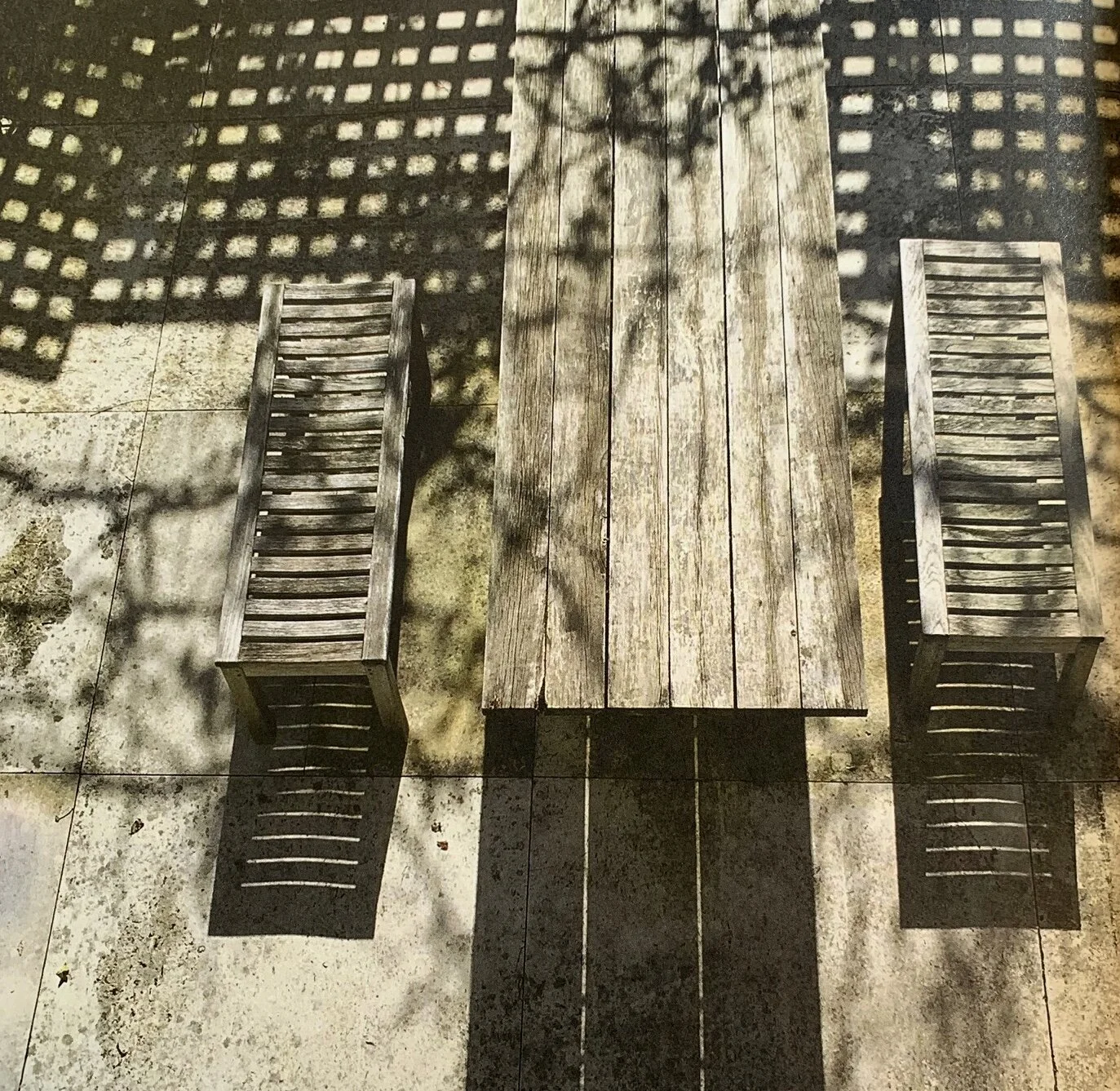
Photographers and Architects both frame space and are selective when at work. In his book, Spectrum, John Pawson clarifies the distinctions between the two practices, despite also evincing a common sentiment.
Photographers and Architects both frame space and are selective when at work. In his book, Spectrum, John Pawson clarifies the distinctions between the two practices, despite also evincing a common sentiment.
Pawson describes the therapeutic quality of photography as a practice, the sense that life passes with such hype that pressing pause on a detail, that is otherwise fleeting, brings about a sense of comfort. Through one moment and one click, photography preserves and reflects perspective.
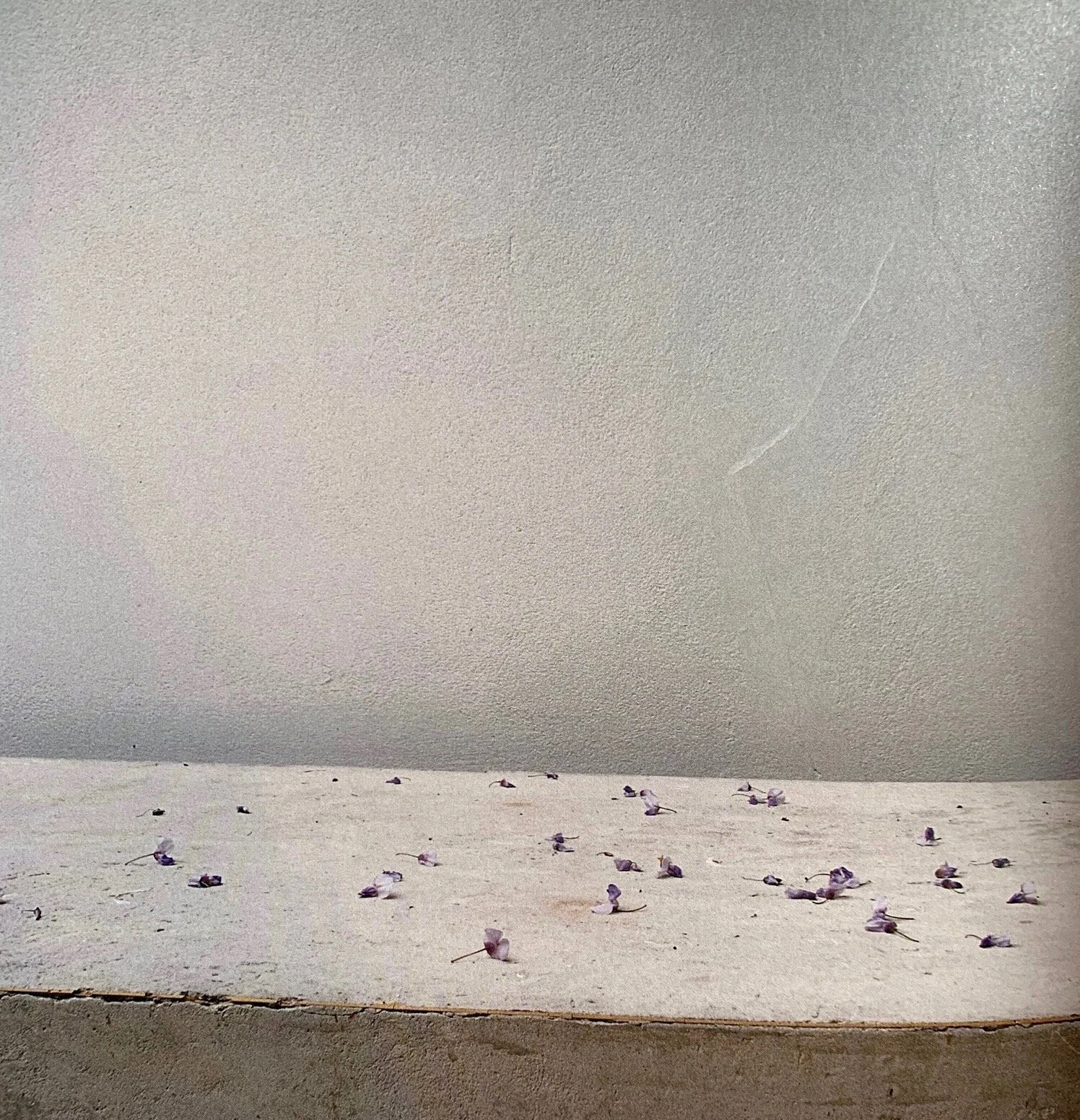
Image: John Pawson
Architecture, by comparison, is a practice of patience and permanency. Clients, finance, infrastructure and permits all push and pull winds into the road of the route to an architectural outcome. So it takes a certain kind of obsessive fierceness to ensure design prevails. Therefore, Pawson’s diverse folio of homes, airport lounges, churches, a monastery, museums and hotels among others, speaks to his successful design principles that pierce through potential impacts to the design process.
The Jaffa hotel in Tel Aviv structurally preserves aspects of its former life as a convent, while the blushing interiors add the warmth of an Israeli dusk. The white walls of the abbey of Our Lady of Novy Dvur Monastery in the Czech Republic, design-wise, feature light and not much else which opens up space for pensiveness. In Berlin, the Feuerle Collection is housed by Pawson’s refurbished bunker. The central black lake and minimal glowing light resets the senses for visitors as they meander ancient sculptural works of South-East Asia. Viewing these works, the space mimics characteristics of swimming, noise is drowned out, sculptures that can only be infinitely heavy seem to lightly float and you become very aware of your breadth.
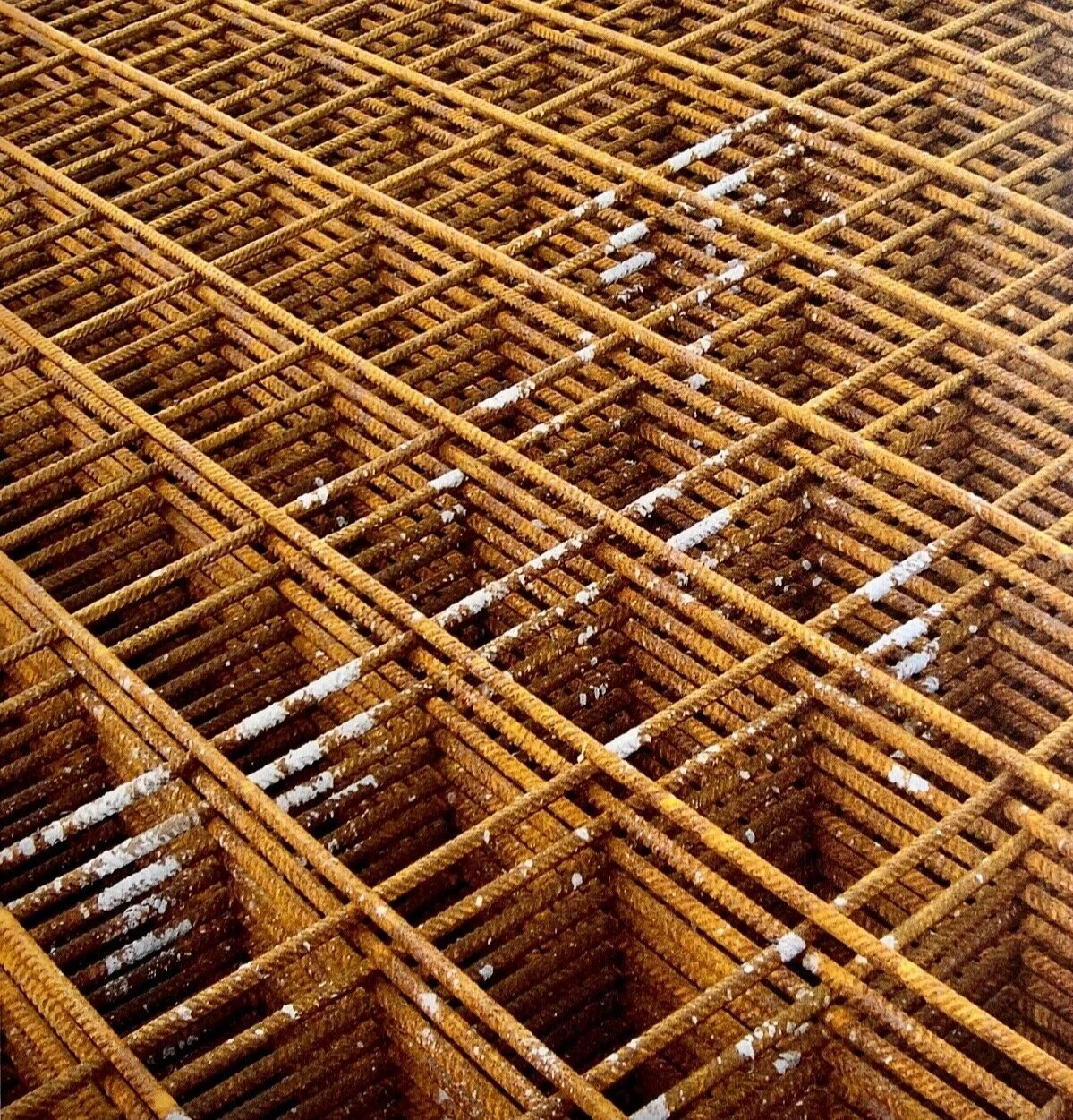
Image: John Pawson
Spectrum reveals a connection in the design philosophy between Pawson’s photographs and his architecture. This being a respect for materials, how they interact with light and their effect on the senses.
The Art of Designing a Gallery
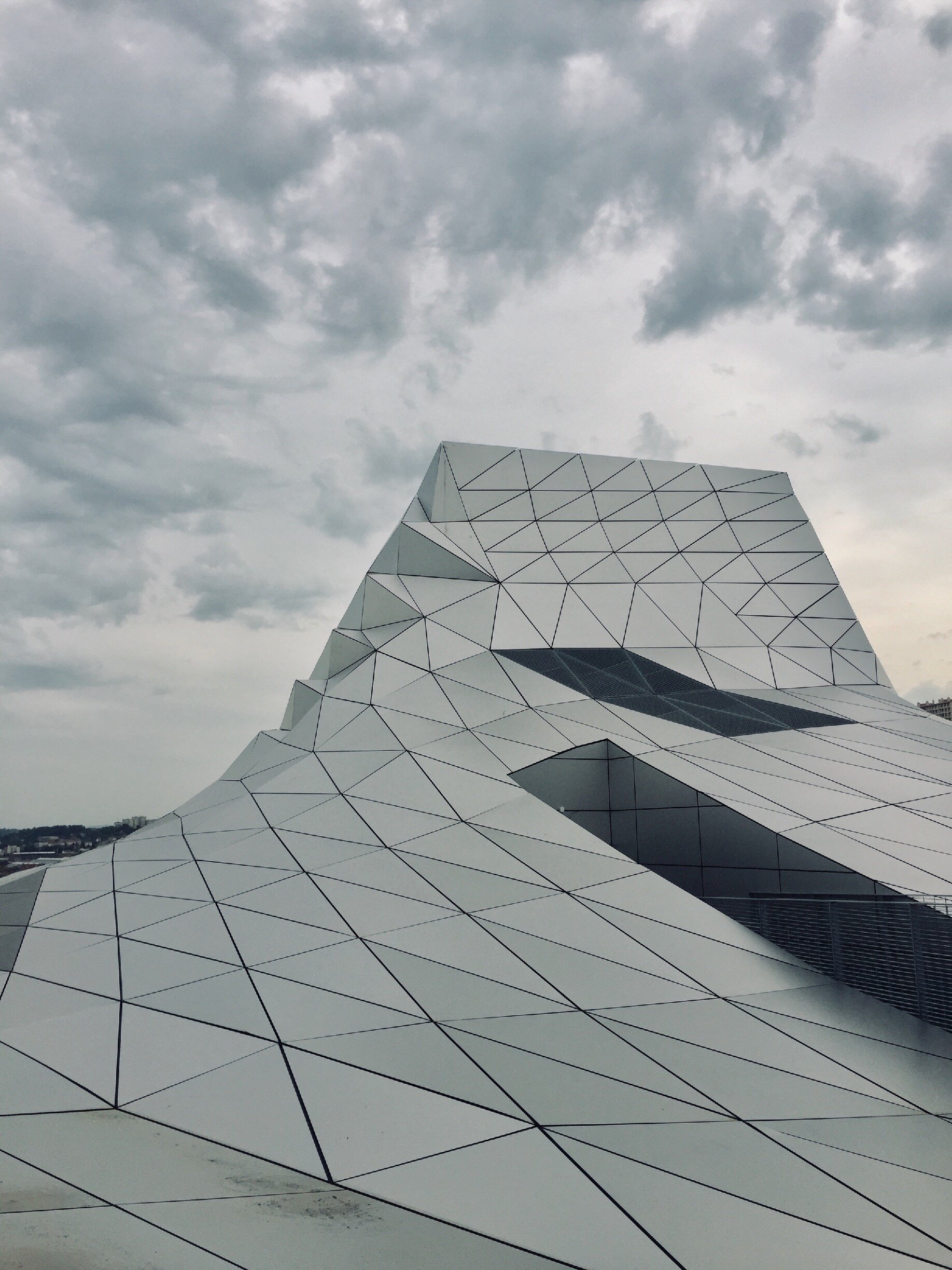
Architecture gives context to the values held during a particular time, in a certain place. A little like art. Even more so, a gallery’s design acts as a precursor, setting the tone for the art inside.
Caitlin Leishman, Lyon 2018
Architecture gives context to the values held during a particular time, in a certain place. A little like art. Even more so, a gallery’s design acts as a precursor, setting the tone for the art inside.
The Guggenheim’s revival of Bilbao
The ‘Bilbao Effect’ is a phrase that describes this building’s role in reviving the economic state of the northern Spanish city. Its startling design has encouraged the tourism required to drag Bilbao up from a worn and torn shipping port to the intriguing destination that it is today.
Built in 1997, the Guggenheim Bilbao was designed by Frank Gehry. The building is appropriately placed in some ways, a combination of curves and industrial materials like titanium, which pairs with the urban setting. In other ways it sticks out blatantly like a spikey, sparkly echidna with its bristles up. Jagged edges and odd angles create a protective shell for the art inside while unapologetically demanding attention. The gift is in this contrast. The titanium may glitter brightly or on a different day, with different weather conditions, it reflects clouds and the ripples of the La Salve river, complimenting its environment.
The interior is far from the white cube, rather there are many different types of spaces to be used purposefully for art, the light and shadows cast by the building are little works of their own. The Guggenheim Bilbao balances hard surfaces with reflective properties softening the overall effect. The materials used in the Guggenheim Bilbao nod to the distressed shipping port that the site once was while the design speaks to the city’s revival.
IK Lab’s Connection to Nature
Nestled into the Mayan Jungle in Tulum Mexico sits IK lab, which opened in 2018. The Gallery was initiated by Santiago Romney Guggenheim (the great grandson of Peggy). Futuristic and primitive all at once, this gallery was designed by Jorge Eduardo Neira Sterkel in collaboration with Guggenheim as an addition to Sterkel’s eco-friendly luxury resort. The building flows with concrete and wood surfaces incorporating tree branches and vines throughout. Hobbit like holes form a visitor’s view from inside the gallery out into the jungle. Walls and windows are decorated with wood and twigs in elaborate patterns like natural stain glass windows. The gallery’s respect for nature is not only demonstrated by the materials used in the build but also by factors such as the gallery being on stilts, as this design decision accommodates flora and fauna to go about their daily pursuits below undisturbed. In addition, no trees were removed in the construction of this gallery. Where the visitor is concerned, a shoe’s off policy delivers a heightened connection between visitor and the values of the gallery – connection to nature. The kind of art displayed is precise, working with the space rather than overwhelming it. Situated high in the treetops, the gallery lends a sense of clarity.
The power…of art and heritage at the Tate Modern
The Tate Modern used to be London’s Bankside power station and was renovated by Herzog & De Meuron in the 90s with Michael Casey as the project architect. Dark urbanism is styled into the geometric shapes within the massing of the spaces. Although it provides adequate space for incredibly large installations there is subtle respect to the building’s heritage as the scale points to the size of the generators and oil tanks that it once held, the Turbine Hall’s dramatic entrance is one example. A modern touch, the ceiling light box, opens up the space for viewing art. The Tate’s structure hints at the power of art and the endurance of heritage.

Consuming Art
The way that art is consumed changes constantly. From social media, where art is viewed through someone else’s lens, to street art where unassuming bystanders become an audience. But these are only a couple of ways to consider the changing consumption of art.
Jeppe Hein, at National Gallery of Victoria, 2018
The evolution of the way we consume Art
The way that art is consumed changes constantly. From social media, where art is viewed through someone else’s lens, to street art where unassuming bystanders become an audience. But these are only a couple of ways to consider the changing consumption of art.
How would you like to see the consumption of art evolve? We asked for the opinion of those across the industry...
Marion Borgelt - Marion is a contemporary Australian artist who has practiced in Sydney, Paris and New York.
My first reaction is to question the word ‘consumption’ because it brings to mind the act of ‘using up ’of utilisation, expenditure, depletion, exhaustion, wasting, squandering, draining, dissipating… I would rather use the words ‘enjoyment and ownership’, which bring to mind something positive and that in turn leads to the idea that enjoyment and ownership of art can enrich people’s lives.
Artist-run initiatives play an important role in building a community and often form a bridge between the artists’ studios and established, professionally run galleries. They are an excellent starting point for artists to connect with their peers and equally play a significant role in bringing artists’ work to a broader audience.
However, art is an expression of the times, whether it’s about the social and political conundrums of our world today, or the more personal statements that fill our heads daily. Unfortunately, the purchasing of art is based on discretionary spending and because it is not considered an absolute necessity to our well-being it is frequently the last item that is purchased, if at all. I would like to see our values towards art change so that it becomes a bigger priority in people’s daily lives. We, who are already in the art milieu know the value of art in our lives but what about everyone else—where do they get their poetry and existential ‘kicks’ from?
Della Butler- Studio Coordinator, Gozer Media
Della worked at Sutton Gallery in Melbourne while also developing her own style of artistic practice, before joining Gozer Media.
I believe that art should continue to shift and change with society’s growth. It is important that it engages with, questions and reacts to current issues.
Hayley Haynes - No Vacancy Gallery
Hayley is the Gallery Manager at No Vacancy Gallery, a Melbourne-based contemporary hire-gallery which links artist-run initiatives and the commercial art world.
I would love to see the consumption of art simply slow down. Whilst it is wonderful how much access we now have to the art world online, I would really love to see people spend more time with art in person. Let the gallery be a place of escape where time stops.
With this being said, I would love to see more people feel less intimidated by art spaces. This is not a new challenge, but it is one that persists. We really try to make No Vacancy a very comfortable space and having the cafe attached certainly helps us bring art to those who might not normally enter a gallery. I think due to the challenging nature of a lot of contemporary art, people often feel that they need a degree in art theory to legitimize their presence in an art space. I want people to feel that it is OK to not understand everything, and furthermore to allow themselves the opportunity (through taking the time) to perhaps take something away from the works on show - to bring their own meaning.
It would appear then that the way art is consumed, person to person, depends on how much the individual values art against other necessities in their lives. Whether they feel art has the ability to inform them or bring enjoyment. The level of importance that an individual places on art then informs how that person will choose to consume it, and therefore how much they allow art to enrich their lives.

The Lunch Hour
Quite a lot can be gleaned about a person from the way they spend their lunch hour. For example, are you:
a. Someone who catches themself looking down at their keyboard wondering how long the bits of brown rice and quinoa have been stuck in it?
Caitlin Leishman
Quite a lot can be gleaned about a person from the way they spend their lunch hour. For example, are you:
a. That member of the work family, chomping at the bit for the baked goods offered up by the full-time manager/part-time baker of the group?
b. A victim of the lunchtime meeting who cannot help but spend longer than needed waiting in the trendy coffee line along with an equally guilty colleague?
c. Someone who catches themself looking down at their keyboard wondering how long the bits of brown rice and quinoa have been stuck in it?
Me? I try to cram as many errands as possible into a lunch hour. This generally ends up with a long line at Priceline, prescription in one hand, and sushi roll in the other getting frustrated by my inability to multitask any further. So I scroll Instagram to pacify myself. What does this say about me? Don’t worry I’m working on it…
After a brief, though perhaps not so scientifically reliable, Google search I can tell you that there is a lunch hour alternative that could contribute to a more productive afternoon. The answer is your local artist run initiative (ARI) or gallery. A few CBD suggestions include:
NO VACANCY: 34-40 BELL LANE MELBOURNE, QV BUILDING
No Vacancy blurs the lines of an ARI and a commercial gallery. It’s a welcoming and experimental space like an ARI but it is also a great spot to purchase art from local artists. The space itself is hired for functions and artist talks or book launches and is adjoined to its own espresso bar. Although in the heart of the CBD, the industrial interior of exposed piping and concrete walls provide an escape from the surrounding office environments. The nature of the building has even been known to influence artists exhibiting, altering their exhibition to make the most of the industrial elements.
WESTSPACE: LEVEL 1/225 BOURKE ST
Getting into Westspace has you stomping up past a lawyers’ office and onto a second staircase. If the retro tiling and OH&S approved stair labels, reminiscent of a high school change room, are concerning you then you’re heading in the right direction. The walk is worth it. Westspace began as an ARI in 1993 but is now more of a blend between a not-for-profit experimental ARI space and a contemporary gallery. With four varying but large gallery areas weaving into each other it lends itself well to group shows and public talks and programs.
NEON PARC: 1/53 BOURKE ST
Situated down an alleyway by a Wilson’s parking complex, the entrance to Neon Parc is generally obscured by a vehicle so you’ll need to keep your eyes peeled for signage. It is an intimate two-room space, which differs from the much larger renovated factory of Neon Parc’s other location in Brunswick.
So, to avoid morphing into a figure from John Brack’s Collins St 5pm, I can suggest a daily dose of art. Just 10 minutes in an ARI or gallery, or a stroll down a lane full of street art is a distraction from the everyday grind – even if it is just on the way back from getting your sushi rolls to eat over your keyboard.