
Book Review: The Wax Child by Olga Ravn Trans. Martin Aitken
The Wax Child (2025) is both a tribute and a warning. Piecing together archival material, Olga Ravn’s novel recalls historical Danish witch trials, spotlighting why reason, justice and humanity are tenuous in the face of misinformation, fear, panic and misogyny. First published in Danish by Gyldendal in 2023, this English version, translated by Martin Aitken and published by Viking Penguin Random House, was longlisted for the International Booker Prize 2026.
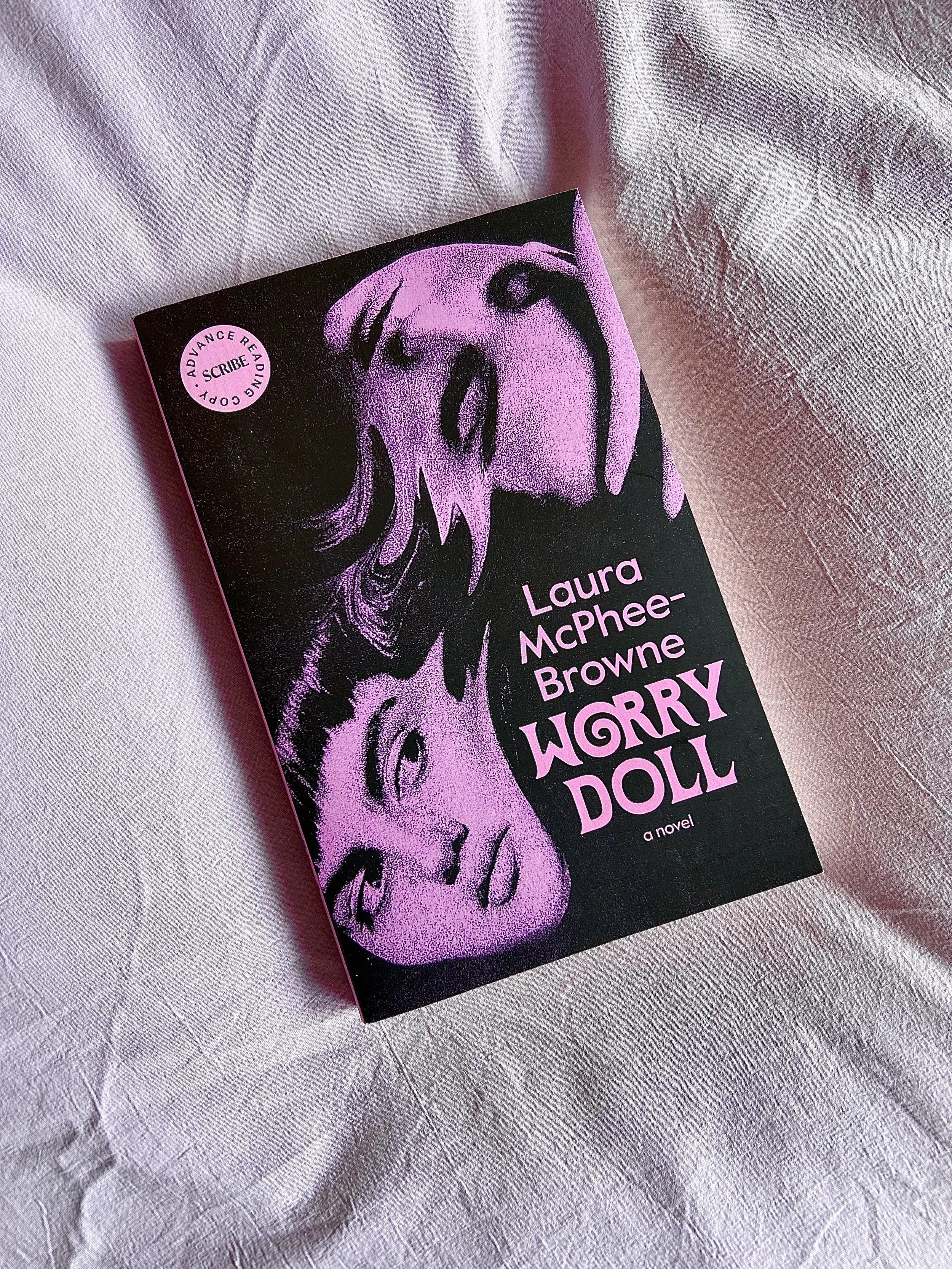
Book Review: Worry Doll by Laura McPhee-Browne
As I finished reading the last words of Worry Doll by Laura McPhee-Browne, my mind conjured a classic Joan Didion quote. Often, it’s used to inspire storytelling, but it also has a darker manipulative connotation, “We tell ourselves stories in order to live.” A clever, mind-bending read, Worry Doll questions obsession, dismissal, love and completely shakes up objective reality. It shouts: there are two sides to every story.
Published by Scribe
Cover art by Allison Colpoys
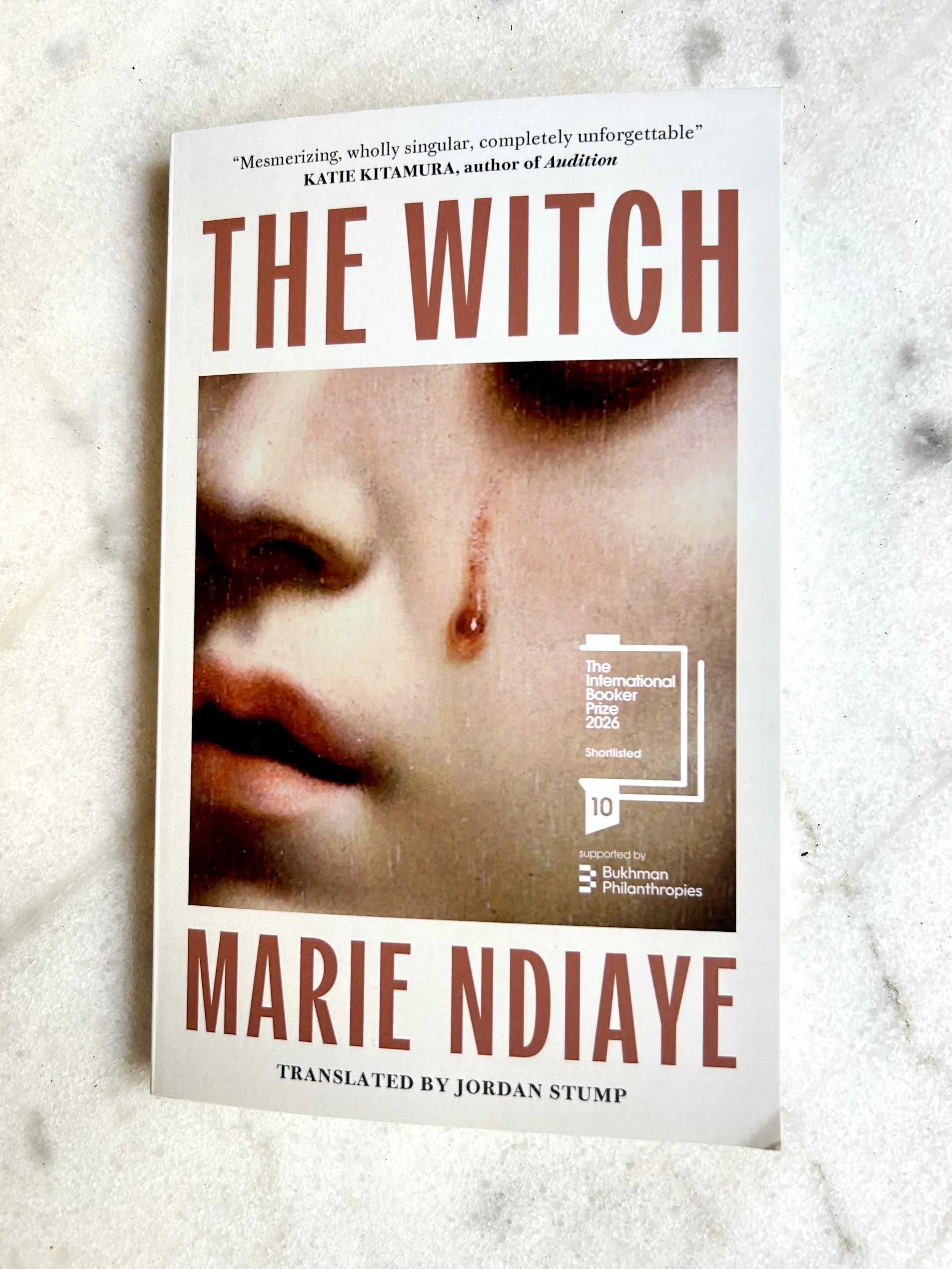
The Witch by Marie NDiaye: Book Review
Blurred around the edges with the fantastical questioning reality and interrupting everyday settings, this small, powerful book feels both light and compelling to read. It is propelled between humour and tension until a baked-in tenuousness surfaces, unsettlingly.
This translation, by Jordan Stump, published by Penguin Random House LLC. (2026)
Cover design by Fran Hambling
The Second Woman - Louise Mey, Translated from French by Louise Rogers Lalaurie
A psychological thriller that shows ‘just leave’ is hardly that simple. This book digs in under the skin and lodges itself in the gut – tying knots and clawing at the lungs, zapping the breath out of you.

Cover design by Louise Cand
This book digs in under the skin and lodges itself in the gut – tying knots and clawing at the lungs, zapping the breath out of you. This is why I’m not sure ‘recommend’ is the right word, but it is undoubtedly a powerful read. The Second Woman is an uncomfortable book to sit with because it gives a face and tone to something generally rendered invisible—hidden behind closed doors or in the yellowing of a mark on a cheek—domestic abuse. The story is told from inside Sandrine’s mind. There’s chaos in there, thoughts that disobey and climb their way aggressively to the front of the queue as she goes about her day-to-day ‘stupid, fat, ugly, bitch’ interjects like a car horn as she silently performs the most mundane rituals like making the morning coffee or doing washing. It’s almost as though the action of having these thoughts has become as much of a part of the ritual as her daily tasks. It is quickly clear that she is someone who does not like herself. Someone who has been told for some time now that she’s not worth it — she is the Second Woman.
The story starts in the present day when Sandrine’s partner is watching TV. His face is drained and gaunt because a woman, who has completely lost her memory, has appeared on the news, someone he thought had ‘disappeared’. The First Woman. As the story unfolds, we find out, detecting alongside police, what has happened to the First Woman. But Mey also delves into Sandrine’s life and history through her thought patterns, demonstrating how we can be held captive to thoughts that others planted in us, even from childhood. These thoughts give an impression of her life with her parents and the way freedom can also feel like despairing loneliness. When someone is abused at home in adulthood and isn’t being shackled physically, often people wonder why they don’t ‘just leave’. Mey unpicks why. The book layers emotional circumstances that cumulatively make leaving difficult. It shows how easily a mind can be moulded and how much it will sacrifice when it craves intimacy, love and security.
While this is fictional, Mey notes at the end of the novel that alarmingly ‘in the UK almost one in three women aged 16-59 will experience domestic abuse in her lifetime’. The Australian Institute of Health and Welfare data from 2016 states that 20% of the population reported ‘experiencing physical and/or sexual family and domestic violence since the age of 15.’ The figures for women are higher, and this statistic only reflects those who have reported it. Although there are significant doses of angst and cruelty throughout the book, and it does make you grateful for the little freedoms one might take for granted, this is also a story of resilience that shows just as you can fall easily into the hands of the wrong people, serendipitously it’s entirely possible to rebuild a life, albeit with scars, with good people. Trust isn’t a completely fruitless exercise; it’s just about having had the luck to establish self-confidence and self-love, before working out who is worthy of your trust.
TÁR: A story of rise, and fall
A woman changes her name, dons a uniform of exquisitely tailored suits and, with genuine talent, sheds her old skin in order to become a world-class conductor of the Berlin Philharmonic – to become Lydia Tár.

A woman changes her name, dons a uniform of exquisitely tailored suits and, with genuine talent, sheds her old skin in order to become a world-class conductor of the Berlin Philharmonic – to become Lydia Tár. The film opens with an audience in shadows, spotlight on Tár who is being interviewed on stage by The New Yorker’s Adam Gopnik. Gopnik begins with a monologue introduction, Tár is clearly a maestro, offering insights on what it is to hear music, when music really starts. The shot pans back to a silhouette of a woman’s ponytailed head, her assistant, mouthing Tár’s words. This interview too is a performance. It’s the first hint that alongside talent, the ‘maestro’ is just one of the many faces this character has. The film explores all of them. The good, the bad and the ugly. Cancel culture, power dynamics, exploitation, love, lust and whether art can be appreciated despite the flaws of an artist, are all investigated in this film which works in the blurry, grey areas. It doesn’t seem to give a clear opinion on these themes, just lays out a story that points to the not-so-straightforward nature of things.
The film is set in music. In this case, the elite nature of it, the politics of it and the sound of it. But sound seems to play another role. What made Tár great, the sound of music she could guide out of an orchestra, also haunts her — misophonia, an extreme sensitivity to sound that disrupts her sleep and impacts her psyche. Visually the film has electric moments, the fierce movements of musicians as they are eliciting powerful or suprisingly soft sounds from their instruments. At other times, silence is the backdrop to gloomy scenes of Berlin that have an eerie, anxiety-provoking affect — not unlike a Daphne Du Maurier novel.
Some have criticised the portrayal of a world-class female conductor being an unlikeable character — considering it’s tough enough for women as it is without the rare portrayals of those who make it to the top spots being unflattering. Why make Tár quite so awful? A fair question but one that also prompted me wonder why women can’t be brilliant and awful, yet admired, in the same way many white male artists have been? I guess she’s a protagonist, not a hero. Criticism that the film is anti—women is complex, and there’s probably no right answer here. A couple of factors I consider are that it’s one of the few films I’ve seen in a while where all of the leading roles are female (albeit not a terribly diverse group). Secondly, the Dresden Philharmonic participated — the actors in the orchestra are world-class musicians, as their talent couldn’t be faked. Perhaps this involvement by musicians contributes to a sensitivity reading of sorts, maybe, maybe not. In any case, the film is a provocative conversation starter…
After the film my partner and I spoke a lot about it, debated it, had a verbal relay of our different interpretations of particular scenes. We struggled — navigating ‘right’ and ‘wrong’ as we discussed, in a bid to find the politically correct or moral high ground on relevant issues raised. But here those issues are complicated, with characters playing in the space between right and wrong, through context. Cate Blanchett, Nina Hoss and Sophie Kauer, directed by Todd Field, wrapped me up in this nuanced story. I don’t know anything about acting, except that if I don’t notice it at all … it must be good.
Joan Didion: A unique sculptor of essays
I borrowed a bundle of books from a former colleague, the kind of sunny person who leaves David Sedaris’ ‘Naked’ on your desk. Her taste in other books was also very much to my liking. Yet, I returned them all…except one—a collection of works by Joan Didion. On the spine are the words ‘We tell ourselves stories in order to live.’

Caitlin Leishman: Interpretation of Juergen Teller’s Joan Didion Portrait for Céline campaign
I borrowed a bundle of books from a former colleague, the kind of sunny person who leaves David Sedaris’ ‘Naked’ on your desk. Her taste in other books was also very much to my liking. Yet, I returned them all…except one—a collection of works by Joan Didion. On the spine are the words ‘We tell ourselves stories in order to live.’
Didion’s subject matter might be mighty but her tone doesn’t get your attention by booming at you. Rather her voice makes her readers aware of things…quietly. Though piercingly. Her words have a habit of lulling me in, gradually creeping up and attaching until they suddenly elicit a visceral reaction, like a snake that seems to appear out of nowhere in one’s path, yet has been there the whole time.
Snakes appeared less metaphorically in her works. In the documentary ‘The center will not hold,’ she says this is because they should be avoided, but that to kill a snake is the same as having a snake. They’re still there. Echoing the snakes she avoided, her writing feels slick, elegant and all seeing, laced with warning.
When I consider the times in which she wrote and the subjects of her essays, think The White Album and Slouching towards Bethlehem, I’m reminded of Cookie Mueller’s ‘Swimming through Clear Water in a Pool Painted Black’ which documents quirky, chaotic, heart-wrenching moments of her life during the same era. However, where Mueller wrote from within her events, Didion seems to be writing from above the fray. It’s as though Didion is gazing upon a crystal ball, not wishing to change or predict events, simply waiting for the image to become clear. She waits, pen at the ready, to demystify the everyday disorder that we can’t make sense of ourselves. It might involve interviewing Linda Kasabian of the Manson murders, or unravelling her own personal grief.
Her ‘crystal ball’ is a notebook. Given her first by her mother as a girl, she was told to stop whining, to write it down, she explains in the documentary. The first story she wrote, at around five years-old, was of a woman freezing to death in the artic, who collapses and awakes, only to find herself dying of heat in the desert. And this from her child’s mind. Years continued, notebooks amassed, “see enough and write it down” became a method in itself. Then one day when she would sit down and have to write for work, on a day when the world seemed ‘bankrupt of wonder’, as she put it, she would have a notebook of observations that had ‘accumulated interest’.
At this point I should warn you that continuing on means reading slabs of Didion’s own words, because each of these are pieces of the jigsaw that I take away from her writing. To talk extensively about her writing and not include it seems unjust, though including too much, when you could just go and read her work, seems wasteful — so be it.
In the 1960s Didion ended up working at Vogue. Another writer was meant to submit a piece titled ‘Self Respect: its source, its power’. But the other writer’s words didn’t come, so Didion’s did. She wrote an essay far grittier than Vogue was known for —but they published it anyway.
What could have been a light pump-up piece on self-respect, instead leaves a reader examining the recesses of their mind. She begins,
“…Innocence ends when one is stripped of the delusion that one likes oneself.”
She frames self-respect as something that starts from a loss, then exposes behaviours that most commonly manifest in lieu of self-respect.
“The charms that work on others count for nothing in that devastatingly well-lit back alley where one heaps assignations with oneself: no winning smiles will do here, no prettily drawn lists of good intentions.”
It’s a passage highlighting the inevitability that that which has, so persistently (if unconsciously), been buried, will be stumbled upon.
Didion then tells us what it feels like, and from where in the void the choice to build it might be plucked.
“To live without self-respect is to lie awake some night, beyond the reach of warm milk, phenobarbital, and the sleeping hand on the coverlet, counting the sins of commission and omission, the trusts betrayed, the promises subtly broken, the gifts irrevocably wasted through sloth or cowardice, or carelessness. However long we post-pone it, we eventually lie down alone in that notoriously uncomfortable bed, the one we make ourselves. Whether or not we sleep in it depends, of course, on whether or not we respect ourselves.”
Self-respect now becomes not something one must earn, but something we can simply choose to possess, in spite of imperfection. Considering the fallible but fabulous Jordan Baker of Fitzgerald’s The Great Gatsby, she points out that,
“…people with self-respect have the courage of their mistakes. They know the price of things. If they choose to commit adultery, they do not go running, in an access of bad conscience, to receive absolution from wronged parties…in brief, people with self-respect exhibit a certain toughness, a kind of moral nerve; they display what was once called character, a quality which although approved in the abstract, sometimes loses ground to other, more instantly negotiable virtues.” She clarifies ‘character — the willingness to accept responsibility for one’s own life —is the source from which self-respect springs.’
By now, this elusive thing, self-respect, has taken on a kind of shape, and so too does the negative space around it, which makes up a forlorn sort of image that can only be what a lack of self-respect might look like.
“It was once suggested to me that as an antidote to crying, I put my head in a paper bag.”
With this inelegant picture in mind, Didion hints that the romance of sadness might be something that some of us find tempting. That during shitty times there’s a certain self-indulgence in imagining a soft flattering light upon tears, that one’s despair might, at least, be graceful.
Didion ends with a warning of sorts…
“It is the phenomenon sometimes called ‘alienation from self’. In its advanced stages, we no longer answer the telephone, because someone might want something; that we could say no without drowning in self-reproach is an idea alien to this game. Every encounter demands too much, tears the nerves, drains the will, and the spectre of something as small as an unanswered letter arouses such disproportionate guilt that one’s sanity becomes an object of speculation among one’s acquaintances. To assign unanswered letters their proper weight, to free us from the expectations of others, to give us back to ourselves — there lies the great, the singular power of self-respect. Without it, one eventually discovers the final turn of the screw: one runs away to find oneself, and finds no one at home.”
I interpret this as a far more eloquent approach to articulating that virtue of occasionally being able to say to ourselves, ‘well… fuck it,’ and move on. But this is only my guess. Her article on self-respect does everything but tell you how to get some. This isn’t her business. As in any of her works I’ve read, she observes, questions assumptions, but never preaches.
Didion died of Parkinson’s disease in December 2021. To write as powerfully she did she lived with a certain sternness. In ‘The center will not hold’ she recalled, at the height of the Woodstock era, getting a request to go to an apartment, someone she knew had something she had to see, and to write about. A small toddler sat on the floor of the room. A normal child, except for the white lipstick. It was on acid. Didion described it as ‘gold’, though her eyes upon recalling it, welling up, highlight that shock remains a key ingredient to stories that stick around in the mind. Rationalising the harsher side of journalism. But she did inflict this journalistic scrutiny on herself too.
“You write your material, you used what you had” she says of writing about her contemplations of divorce while on holiday, an article edited in fact by her husband.
Reading Didion’s work is like sitting down and having an honest and disarming conversation with someone about how things really are. Her words, like a renaissance marble sculptor, seem to chip away at the mass of an outer shell, revealing and leaving only what’s left at the core.

The Nose: Nikoli Gogol
In his short story The Nose, Nikolai Gogol wrote that, ‘The world is full of the most outrageous nonsense.’ And it opens with nothing less than that.
In his short story The Nose, Nikoli Gogol wrote that, ‘The world is full of the most outrageous nonsense.’ And it opens with nothing less than that. A barber is having breakfast with his nagging wife. The options are an onion, a bread roll or coffee. He is allowed to have some but not all, his wife insists, so he forgoes the coffee. As he slices into the roll, he realises a nose has been baked into it and recognises it as that of his esteemed client ‘The Major’.
The Major is a ladder-climbing narcissist who, upon finding nothing but a flat fleshy plateau in the centre of his face that morning, instantly began to fear for his social status and potential loss of charm with married ladies. He darts around the city in a bid to locate his nose. When the Major finds his nose, Gogol narrates that ‘Even joy begins to fade after only a minute,’ as it dawns on the Major that he has no way to reattach his nose. A doctor explains that sticking it on is his only option – and it would look awful. The doctor insists he’s better off without it, life would be ok and he’d get used to it. But the Major’s ego can’t bear the thought, after all he has high hopes of growing his importance in his wealthy circles.
Throughout his mission to return his nose to its rightful place, the Major’s misogyny becomes apparent. He passes beggarwomen that he usually laughs at due to their dress that only leaves their eyes visible. But he doesn’t laugh as he runs by them also covering up with a handkerchief to his face. At the City Security Department where he hopes to place an ad for his missing nose, the Major notices one by a 19-year-old girl who has laundry experience and is willing to do ‘other’ work. Later, in despair, he accuses Alexandra Podtochin (a statesman’s wife as he often repeats) of witchcraft as he believes she is taking revenge for him not marrying her daughter. The Major is also disrespectful to those he views as lower class, such as his threadbare barber who he insults constantly for being dirty with ‘stinky hands’. An aspiring statesman and wealthy governmental-like figure that acts with prejudice, insolence and idiocy, the Major seems to satirically shed light on Gogol’s views of an incompetent government leaving many of its people behind.
The Nose develops its own personality and becomes even more stately than the Major himself. For that day, the Major is out-ranked by his own nose and a taste of what life could be like for those less fortunate. But any self-reflection the Major may have is fleeting – particularly once both his luck and nose are magically returned to him.
In children’s film, Mary Poppins, Mr Banks is oblivious to his children and pre-occupied with only his own career. Mary Poppins explains to the children that ‘Sometimes a person we love, through no fault of his own, can’t see past the end of his nose.’ Gogol seems to have almost pondered this phrase literally (though in 1836 well before Mary Poppins) by taking the nose off the face of an ignorant being and extending the distance between a him and the end of his nose, thereby allowing more of the world to broaden his narrow view of it. This doesn’t work for the Major, maybe it was only meant for the reader…
This could also be a ridiculous link to make. After all, Gogol writes at the end of the story, in a conversation between reader and narrator, that such fantasies are useless and serve no one. Yet, he then doubles back a little, suggesting that there’s an absurd side to most things.
Some might be tempted to contain absurd fantasy to the realm of children’s tales…but The Nose hints that a self-obsessed view of the world doesn’t discriminate. For adults, the absurd can open our eyes to the reality around us, that we also are missing.

Etta: An antidote to anger
Etta James’ voice leaves me breathless. But not in the usual way.
THE FIRE
Etta James’ voice leaves me breathless. But not in the usual way. Hers isn’t a voice that lifts you above the fray, into the clouds on honeyed lyrics. No.
Etta dives straight into the gut and stokes the embers that one has been trying to keep at bay. Embers that have been slowly burning away, distracting one’s capacity for joy. The crackling embers of rage.
ETTA KNOWS
Etta was born Jamesetta Hawkins in 1938, her mother pregnant at fourteen. Etta never knew her father, he was a figure of rumours. She was raised by adored adoptive parents before her mother returned for her when Etta was 12. Her mother may have come back for her, but an only minimally present mother — sweeping in and out on the glamourous scent of midnight cologne — she perhaps left the lingering weight of abandonment, perhaps later, an understanding. A largely self-parented teenager, Etta navigated a music career, substance abuse and adulthood early.
A mugshot might mark Etta’s arrests for drugs and bad cheques, yet a star on the Hollywood Walk of Fame proves that celebrated glittery talent can exist hand-in-hand with long and twisted roots. Etta’s telling of life reiterates that we are more than one thing. The soul behind her indelible voice comes from lived experiences - both of fame and felony.
I’d Rather Go Blind is a song about a woman who can’t bear to watch her lover leave her for someone else. It’s nostalgic and heart-breaking with a haunting veil of envy. She sings it with the desperate fury of someone familiar with the injustice of loving and having loved ones leave. Singing live at Montreux in 1975, as a 37-year-old, her face contorts, sweat ripples down her neck as she forcefully ejects the words with a possessed jerkiness, as though she’s a vessel for many angry voices. She plays to the audience. Bends down to them from the stage, meets their eyes, drawing them into a trance. She brings her microphone down to her hip, letting the power of her raw, unamplified voice directly meet its audience. In parts, she is a gravelly, Hendrix guitar vocalised. She will stop and start, using silence, letting her audience catch up to the meaning in her words. She pulls her collar up to ‘blind’ herself, because one can still be playful in anger. Thirty years on, she sings I’d Rather Go Blind again, backed by the band The Roots. She wears a red sparkly jumper. This time she doesn’t lean into the audience or energetically cross back and forth as she sings, rather she is seated on stage. Although age is physically catching up with her, her mind doesn’t appear at all weary. She scats lyrics with wit. The fire is still there in the light reflecting off her sparkly jumper, in the sweat glistening on her brow and in the tears in her eyes.
Although I’d Rather Go Blind is a story of agony, she also sang with just as much heart about hope. When she sings At Last it’s as though an older couple is dancing in public. Their audience grows. The backing music stops and her voice alone moves them. They circle, roll out to their arm’s length, to the brink of separation, before they roll back into each other. The scene is like the aftermath of a drama, a lifetime together, when a marriage finds that in fact it could climb down off the rocks.
Etta sings,
Oh and then the spell was cast
And here we are in Heaven
For you are mine
At last....
Her rendition of At Last suggests that enduring love isn’t always blissful with sun rays, but rather those are the ephemeral moments in between anger, forgiveness and mundane life. Which is ok, Etta seems to hint, because sometimes love also needs to be endured.
Etta passed away in 2012 from leukaemia. A six-decade career that inspired the sound of other musicians we know, alongside a lifetime of battles with lovers, friends, the authorities, dementia and herself. Only someone who knows rage like this, the never-ending rolling hills of it, detailed in her autobiography Rage to Survive, can deliver music raw enough to make one recognise one’s own. During her life she was shamed for her rage, her outbursts — but in a way her anger could be considered a source of her music’s power, its visceral effect.
THE PURGE
Etta makes fury sound beautiful, enough that it fuels that angry fire in the belly, until the maelstrom of waves simply has to boil over. She forces this necessary emotional purge. In John Le Carré’s novel, The Tailor of Panama, a female character describes her own temperamental fury as ‘the tantrums that ran through me like conflicting impulses of hereditary electricity.’ It’s this kind of caged fury, reverberating around nerves, that Etta relieves by poking holes in dignity, so that these currents of energy might ride on the backs of tears out of the body.
She sings,
Something deep down in my soul said “Cry girl”
Cry Cry
A PHOENIX
In my mind Tell Mama, a soulful album she recorded in the 1960s, transports me to a kitchen table, cupped hands prop up my head, a stiff drink nudges a resting elbow. Someone I trust listens to my grievances, taking a little of their weight. Etta’s songs hug the body like this, an angry hug that squeezes the last self-pitying thought out, provoking a kind of gentle exorcism– it’s this quality of her music that renders one breathless.
At the end of Etta’s songs there’s a stillness left behind, after the anger has gone, like she’s gifted a pocket of silence that one can rest in for a moment, building resilience.
When a melancholia won’t shift, the French call it ‘la vague à l’âme’ (my soul is in the waves). No therapy will replace this deep-rooted rage with strength, the way Etta can.
This is a reflection on Etta James’ music, and how it reaches beyond the ears. Regarding her own life experiences and sentiments, I refer to candid recollections from her autobiography, Rage to Survive, 1995.

Capernaum: Child Parents
Capernaum is a film about an 11 year-old boy (Zain) who, while serving a five year prison sentence, sues his parents for giving birth to him.

Still from film
Capernaum is a film about an 11 year-old boy (Zain) who, while serving a five year prison sentence, sues his parents for giving birth to him. He asks a judge to order that they have no more children. A life of neglect informs his conviction that those who can’t look after children, shouldn’t be allowed to bring them into the world.
A flashback reveals the events that led to Zain’s imprisonment. His mother and father are negligent and so Zain acts as a guardian to his younger sisters. In a touching scene he washes the bloody underwear of his 11 year-old sister Sahar as she experiences her first period which, if not concealed, will likely prelude her premature marriage. Eventually Zain runs away and meets Rahil who is working at a decrepit amusement park. Rahil is an Ethiopian refugee, illegally in Beirut with her infant son, Yonas. Zain moves in with Rahil and when she disappears, Zain again finds himself in a parenting role. Despite his youth, Zain instinctively steps into the shoes of absent parents.
Parenting is a unique responsibility that requires no qualification. Social services may appear when maltreatment is confirmed, but this depends on the country and an assessment often occurs after the child has been plunged into a precarious situation. Zain’s parents are abominable. They run drugs, they make their children work, and they manhandle them. However, through living on the streets caring for Yonas, Zain gets a dose of the ethical struggles that come with parenting in poverty.
The word capernaum is described by director Nadine Labaki, in an interview for the Globe and Mail, as chaos. It is derived from the Hebrew word Kfar Nahum ‘Nahum’s village’, an ancient town in Israel. Over the centuries the town was destroyed and rebuilt continuously. Capernaum came to mean a place with a disorderly accumulation of objects.
The film is set amongst this disorder. The slums are piled high with the inventive logic of the poor making do with the little that they have. A window makes a suitable door, an electrical wire provides a clothes line. Dali’s melting clock would hardly turn heads in this topsy turvy setting. The handheld camera work captures the chaos of Beirut with an urgent sense of scavenging through messy homes, dirty bins and crowds of people.
At times the film seems to prolong these daily scenes of squalor rather than progress the plot-line. A fridge being emptied becomes an event; rotten beans, mouldy pots, and sludgy remnants of decaying food leaves only ice and sugar to fill hungry bellies. However, the cumulation of these slower-paced scenes is deceptively disturbing. They don’t rely on the shock factor of starving children, like a World Vision ad, rather much of the barbarity and abuse in the film is implied. It’s not until the end, after seeing a plethora of mundane scenes of wretched daily life, that the emotional effectiveness of this strategy is felt. Subtle footage is more bearable for the viewer and allows for closer attention to be paid to each injustice, which ultimately provokes a greater empathy than raw ‘shock factor’ could have achieved.
Labaki establishes a hierarchy of victims of the refugee crisis. The children are left to fend for themselves in impossible circumstances. But the parents are victims of their refugee status too. They may be negligent, but are also without the means or prospects to support a family.
This is not simply a sad film. While it may lead to a collection of tears on the chin, these will also be the result of heart-warming moments. Zain doesn’t only fight for his own cause, but speaks as the voice for many children when he reproaches a judge, and all adults, for not protecting them. The film prompts admiration of a little boy’s unwavering resilience, and questions how many of the 631,000 children in Lebanon (estimated by Human Rights Watch) are forced also to live so far beyond the scope of childhood.

Say Nothing - Patrick Radden Keefe: A book (reaction)
Upon finishing Patrick Radden Keefe’s ‘Say Nothing’, a work of investigative journalism that pieces together the broken fragments of the “Troubles” in Northern Ireland, I was bursting with a sense of injustice and confusion about whether I was immorally sympathising with terrorists.

Image from book

Image from book
Upon finishing Patrick Radden Keefe’s ‘Say Nothing,’ a work of investigative journalism that pieces together the broken fragments of “ The Troubles” in Northern Ireland, I was bursting with a sense of injustice and confusion about whether I was immorally sympathising with terrorists.
I wanted to google Sinn Féin, get to the bottom of unanswered murders and, and…mostly - I wanted to tell my Dad all about it. To sit down with wine and have him help me thrash out the mess in my mind. I needed to find a moral position on The Troubles that felt just, considering all the atrocities that book unpicks. In fact, by the end of the book, “The Troubles” started to sound a little esoteric and timid, the kind of term that a grandmother might use to gloss over a family member’s indiscretion, that ought not be discussed in public.
Turns out, finding a moral position is not that easy. Say Nothing doesn’t give conclusions as much as it explains many perspectives on the truth of the events. Viewing The Troubles through the eyes of those interviewed, it illustrates how humans can push their minds and bodies to inconceivable limits, how much a cause gives them the will to do so, and how they reckon with their actions when their cause disintegrates.
From the 1960s to 1990s fights occurred simultaneously between the Irish and the British and the Catholics and the Protestants. A certain toughness was embedded in anyone who’d lived through any part of the 30 years of violence. Dolours Price was an attractive young political activist for the Irish Republican Army (IRA). When she recounts being involved in a Catholic peace-protest that marched through several small towns in a bid to end the religious persecutions in Ireland, she was ambushed and pummelled with bricks. Managing to escape, she returned home and told her mother. Her mother responded by asking why she hadn’t fought back. Price’s Aunt Birdie was left blind with no hands after having been blown up by a bomb she was planting before Price was born. She was considered a family hero. The fight was passed down from generation to generation. Parents were proud of their children’s involvement, even if it meant their children risked their lives or wasted away.
Price never had a good relationship with food after hunger striking in a London cell, where she was imprisoned after bombing the Old Bailey Courthouse in 1973. After hunger striking for just over two weeks, she then spent another 167 days being force-fed through a metal device and tube. She was transferred to Armagh prison in Ireland, where she developed anorexia dropping to 33kg before she was hospitalised. Even then her mother didn’t discourage Dolours’ life-threatening crusade - rather she admired her audacity.
The Belfast Project was initiated by a small department within Boston College whose mission was to preserve a complete collection of accounts from The Troubles. They conducted covert interviews with ex-IRA members who risked arrest from the police or death for betraying the IRA, should the interviews become public. The Belfast Project was a reassuring thought. Perhaps all this destruction would amount to something meaningful for future generations to learn from. For participants, who could tell their version of truth, the interviews were a means of confronting their past actions. While not condoning violence, it felt reasonable to sympathise with many of those involved, at times to even fall into step barracking for them. Reading these accounts of The Troubles, it became a struggle to maintain sight of the moral high-ground as sympathy seeped in.
There were only two people for whom I could not garner an ounce of sympathy. Rather, it was a relief to be able to place the blame squarely on -Margaret Thatcher (Prime Minister of the United Kingdom) and Gerry Adams (Leader of the IRA) - Although neither of their perspectives was included in the book, both Thatcher and Adams appear puppet-masters. They controlled others according to their political strategies and both seemed willing to throw their loyal followers under the bus if need be.
At the time the British Army was using severe methods of ‘enhanced interrogation’ that were developed by a British Officer, Frank Kitson, while he was based in Africa. His techniques were used again on suspected IRA members. In 1972 a peaceful march was held against these interrogation methods and internment without trial. British soldiers shot 26 unarmed Irish civilians at the Bogside Massacre, aka the Bloody Sunday of which U2’s Bono sings. In 1978 the European Court of Human Rights decided that the techniques, while degrading and inhuman, didn’t amount to torture. This ruling opened the doors for President Bush to use them at Guantanamo Bay years later. Aside from the torture and the shooting of civilians, the British army was also running informants within the IRA. Some had been informants living dual lives for decades, and had been promoted to key IRA positions. These positions often meant they were involved in violence. A British officer spoke with Thatcher about his concern that the British were effectively permitting mass murder. She ordered them to keep doing what they were doing, and not discuss those details with her.
Gerry Adams seems to be the founder of Fake News, answering sticky media questions about his IRA involvement with a hollow denial. As a leader of the IRA, the politician was known never to put himself in a compromising position, rather let others do his dirty work. He orchestrated operations and inspired recruits. When it didn’t suit him to be a part of the IRA publicly, he took the - now tried and tested - politically successful approach of simply denying the obvious.
Rick O’Rave, a participant in The Belfast Project summarises the intelligence and ruthlessness of Adams’ personality,’…anyone capable of playing such a long and calculating game and dispatching six men to an unnecessary death must be a genius of political strategy - but also a sociopath.’ This recollection refers to Adams declining an offer that would have saved six hunger strikers. The six deaths would lead to anger and increased support for the IRA - politically, it served him if they died.
The Guardian printed in February of this year that Drew Harris, (Garda Commissioner and former Senior Officer of the Police Services of Northern Ireland), agreed that the IRA Council still oversees the Sinn Féin Party. Sinn Féin reportedly supported the marriage equality bill and to legalise abortion. They stand against anti-immigrant policies and prioritise addressing the housing crisis, all policies of a party that might be fairly reasonable to support, were it not for this large question mark over its past. Although the party denies that it is overseen by the IRA, The Guardian also reported that Gerry Adams was, secretly, put on the negotiating panel this year as Sinn Féin attempted to form a government with political party Fianna Fáil.
War was never declared, but there was violence for 30 years. The fight was subversive with ulterior motives, creating an environment where no one could be trusted. Yet so many acted in blind faith. The participants of the IRA were strong-willed, the hunger strikers one extreme example. Despite their resolve one can’t help but feel they were all exploited.
When the cause that so many risked their lives for (and took lives in the name of) just fizzles out…where does that anger go? When so many still have their own secret history associated with The Troubles - one that if revealed still risks punishment - how can the cloud of mystery ever be lifted?
Say Nothing educates through the eyes of others, and the more information it gives, the more questions it creates. What kind of justice could possibly bring closure to such a twisted set of tragedies? To all those who still have unanswered questions - would the truth even be enough - or would it only be painful? In any case the whole truth is unlikely to ever come out, because there will always be witnesses who believe silence is their only option and so they will continue to say nothing.

Stasiland: What does choice look like, under oppression?
In Orwell’s fictional state of Oceania, paranoia breeds fear, and the human reaction to fear is to seek protection. This combination led the citizens of Oceania into the Party’s arms.
Caitlin Leishman: Interpretation of original cover art
In Orwell’s fictional state of Oceania, paranoia breeds fear, and the human reaction to fear is to seek protection. This combination led the citizens of Oceania into the Party’s arms. Published 70 years ago, Orwell’s 1984 discusses the impact that a claustrophobic oppression and effective propaganda has on the psyche, and an individual’s moral decision-making capacity - when choice appears scarce. In this sense oppression and its symptoms were crucial to the attitudes and actions of the German populous under Nazism in the 1940s and again under the communist German Democratic Republic (GDR) in the 1980s.
Anna Funder, during her research for her novel Stasiland, found herself in awe of the remnants of a real life Big Brother. The final chapter features 40 determined individuals who sit piecing together the puzzle of shredded Stasi files, surrounded by tall library-like hallways of sacks, filled with more thin ribbons awaiting their reconstruction. With only 40 people it is estimated that it will take 375 years to reconstruct the files. They continue the seemingly impossible task in a bid to use the Stasi’s own records to resolve the many still unanswered questions held by those who lived in East Germany under the GDR-questions, for many, concerning the fate of disappeared loved ones.
Stasiland is a narrative about humans and the decisions they make when under a dictatorship. Rather than teaching historical facts, Funder allows the descriptions and experiences of her subjects to more powerfully reveal how it felt to live under the GDR. Paranoia seethes through the conversations as they relay their stories. Some interviewees are resolute about the righteousness of their actions, while others wrestle with the shame of having acted in a chameleon-like way. In the past they participated with the Stasi, camouflaging themselves despite their morals, only to regret the decisions they made.
Funder gained the trust of former GDR members Von Schnitzler, a television presenter and Herr Koch the cartographer who designed the Berlin Wall. Von Schnitzler put a voice and face to the regime, and is proud to have done so. Conversely, Herr Koch represents a Stasi member psychologically trapped into participating. He tells the story of his father who, as a teacher acting under duress, taught regime values to children. Herr Koch, bearing witness to this, fell into the party line. He and his father both contracted their values to comply with the GDR agenda. Frau Paul acted in resistance to the GDR with associates despite the risk. She was left with her own ‘Sophie’s Choice’, one that exhibits the undeniable moral strength of the teary woman Funder interviews, as recalls choosing between being separated from her son and informing on resisters who had placed their trust in her.
In 2013, Iranian psychologist and Georgetown professor, Fathali Moghaddam, wrote The Psychology of Dictatorshipas a critique of the way dictatorships have been traditionally thought to come into and maintain their power. He argues that rather than using ideology to ‘fool’ the masses, the people know what’s going on and its brute force that keeps them in line. He discusses that people resign to it and adapt their values just enough to survive. Similarly, as Auschwitz survivor, Primo Levi, discusses in If this is a man, under extreme oppression a strategy to maintain sanity is to relinquish hope and desire. If a human loses the capacity to hope, they are more able to adapt their morality and make choices for survival accordingly.
This rationale, as well as the contrasts between the willingness of the two former GDR members and the inner battle Frau Paul discusses as a resister, gives shape to the burden of the decisions people make, when forced to choose within the confines of an oppressive climate. It explains how they condition themselves psychologically to survive and challenges readers to consider empathy.
As a journalist, Funder has considered not only the form of psychological behaviours or decisions, but also the pathological. Her piece for The Monthly, ‘Not My Type’, discusses ‘whistleblowers’ and ‘leakers’ and the differences between the two as a matter of conscience. Whistleblowers being morally influenced and leakers (seeking power) acting pathologically. Considering this, Stasiland is a raw investigation of the psychology of oppression. Funder’s interviews are unique as they take place in the present, in freer times, but discuss decisions made in the past during oppression. Reflecting on past actions, the conversations reveal the struggle individuals, from on either side of the communist line, have in reconciling the decisions they made then so that they can live with themselves now.
Anna Funder’s Stasiland: Stories from behind the Berlin Wall is an unsettling report that makes use of her skills as an international lawyer, a documentary filmmaker and a multi-lingual government negotiator. Eighteen years after its publication Stasiland continues to teach that the decisions we make, even under extreme circumstances, define us in the eyes of others and ourselves. When an oppressed individual sacrifices a desire to survive above all else, enough to risk their life for their values, they steal back a sense of choice and retain an ounce of their moral identity to build upon, should they outlive their oppression.
Spectrum: John Pawson
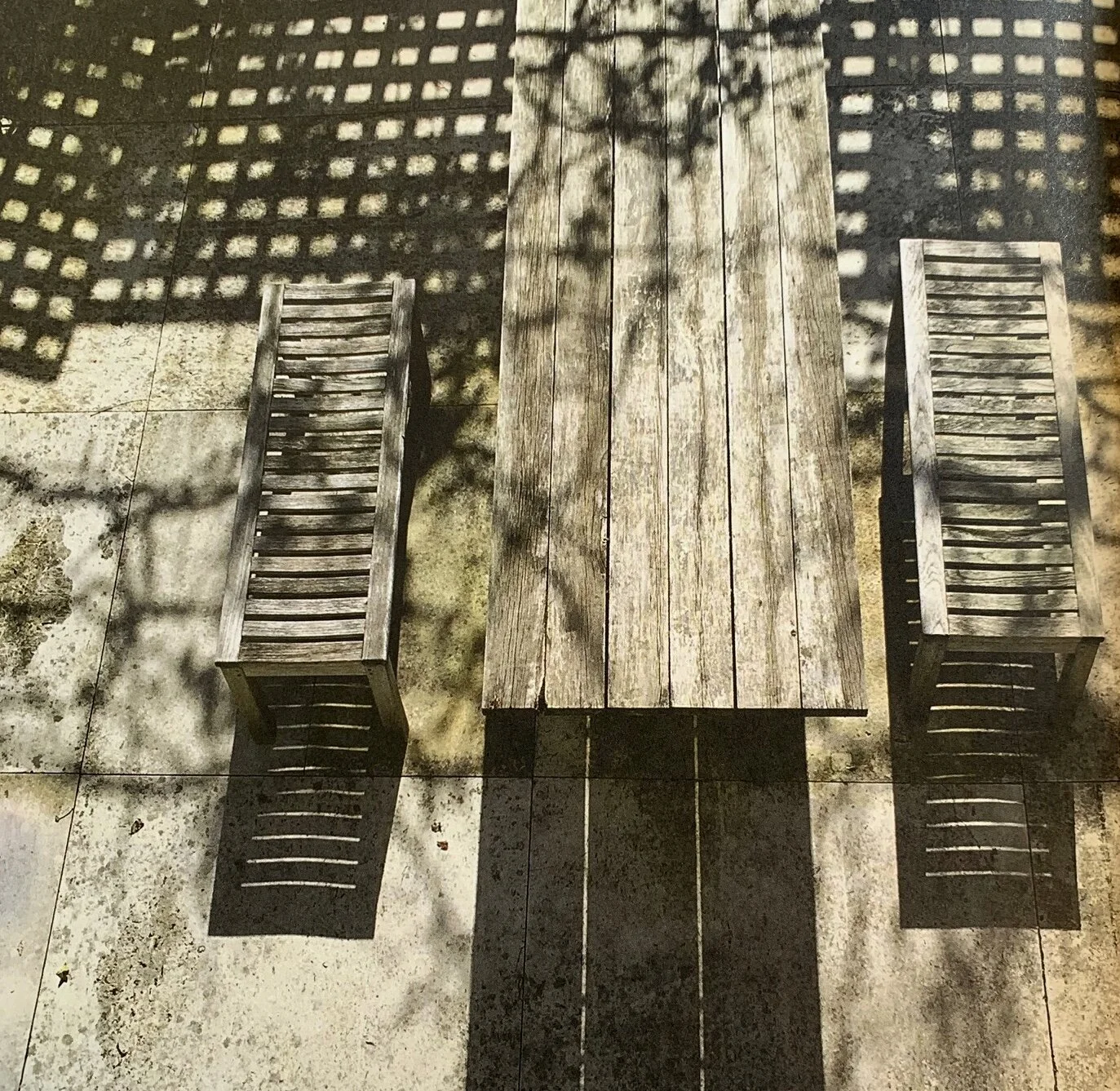
Photographers and Architects both frame space and are selective when at work. In his book, Spectrum, John Pawson clarifies the distinctions between the two practices, despite also evincing a common sentiment.
Photographers and Architects both frame space and are selective when at work. In his book, Spectrum, John Pawson clarifies the distinctions between the two practices, despite also evincing a common sentiment.
Pawson describes the therapeutic quality of photography as a practice, the sense that life passes with such hype that pressing pause on a detail, that is otherwise fleeting, brings about a sense of comfort. Through one moment and one click, photography preserves and reflects perspective.
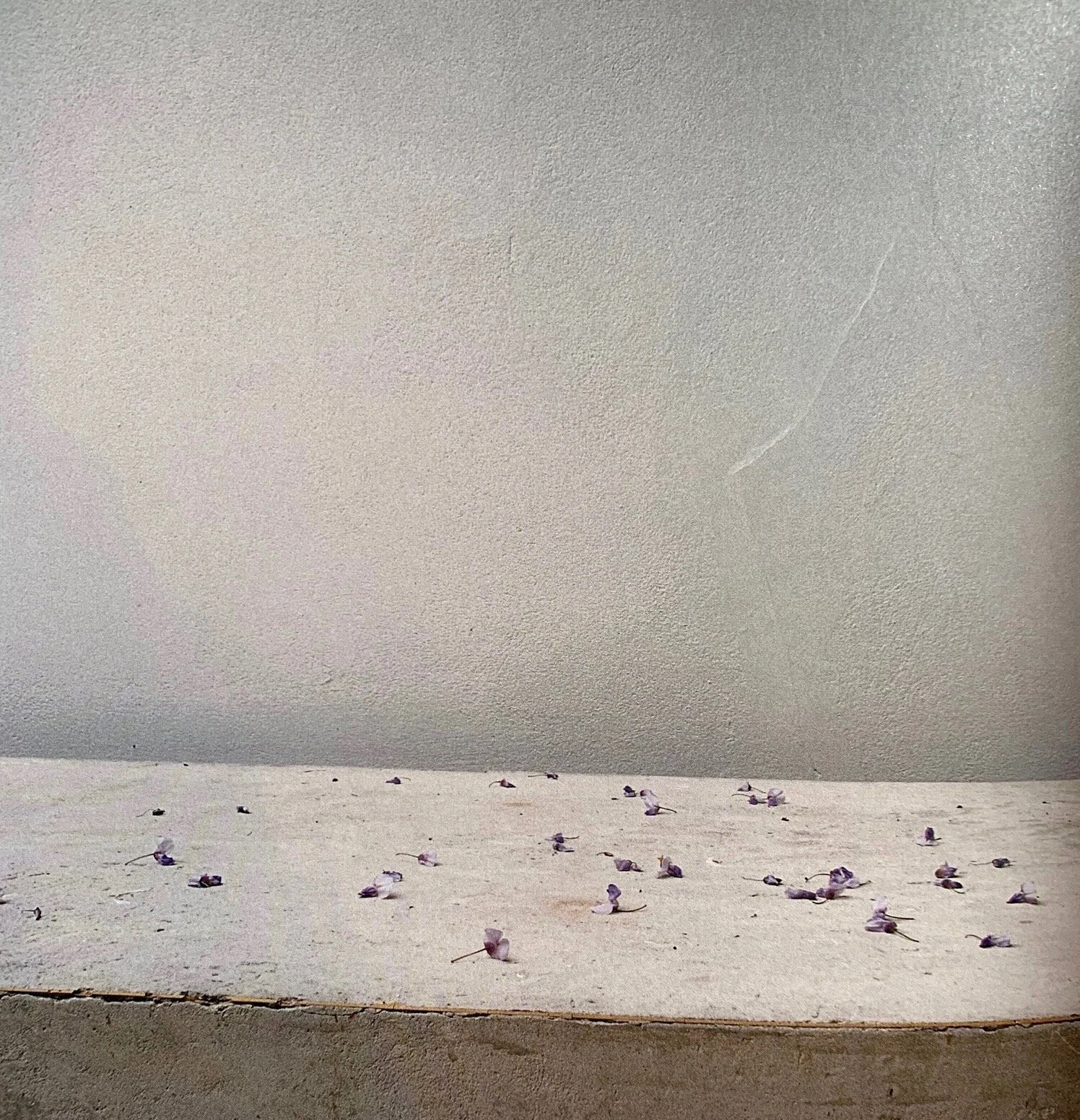
Image: John Pawson
Architecture, by comparison, is a practice of patience and permanency. Clients, finance, infrastructure and permits all push and pull winds into the road of the route to an architectural outcome. So it takes a certain kind of obsessive fierceness to ensure design prevails. Therefore, Pawson’s diverse folio of homes, airport lounges, churches, a monastery, museums and hotels among others, speaks to his successful design principles that pierce through potential impacts to the design process.
The Jaffa hotel in Tel Aviv structurally preserves aspects of its former life as a convent, while the blushing interiors add the warmth of an Israeli dusk. The white walls of the abbey of Our Lady of Novy Dvur Monastery in the Czech Republic, design-wise, feature light and not much else which opens up space for pensiveness. In Berlin, the Feuerle Collection is housed by Pawson’s refurbished bunker. The central black lake and minimal glowing light resets the senses for visitors as they meander ancient sculptural works of South-East Asia. Viewing these works, the space mimics characteristics of swimming, noise is drowned out, sculptures that can only be infinitely heavy seem to lightly float and you become very aware of your breadth.

Image: John Pawson
Spectrum reveals a connection in the design philosophy between Pawson’s photographs and his architecture. This being a respect for materials, how they interact with light and their effect on the senses.