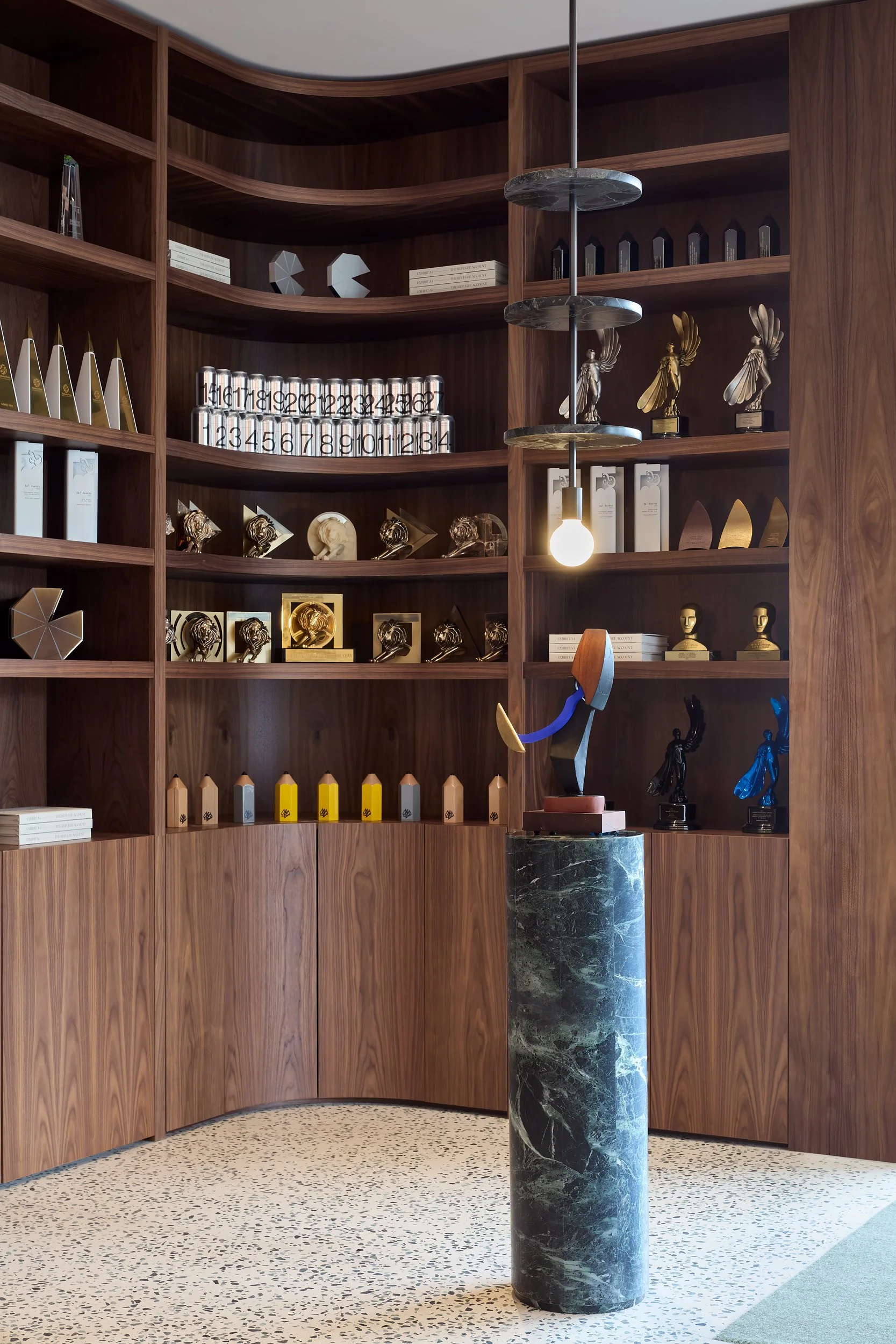
Howatson Company by Those Architects and Smart Design Studio
Howatson Company’s new Sydney workspace weaves together two distinct buildings into a cohesive, elegant environment – eclectic in character and elevated by gallery-like details throughout.
Image credit: Luc Remond
Featured artwork: Luke Storrier

Artbank: 45 years of investing in Australian art
With one hand, Artbank heroes artists who may otherwise struggle to emerge in a competitive and sometimes luck-based industry. With the other, it extends the reach of art by gifting it to the public who may otherwise never think to seek it out. Harnessing art’s ability to garner boldness and empathy, Artbank’s role remains crucial in showcasing thought-provoking joys from contemporary Australian artists.
Celebrating its 45th anniversary, Artbank’s continues to uplift Australian contemporary art to the benefit of both artists and art lovers.
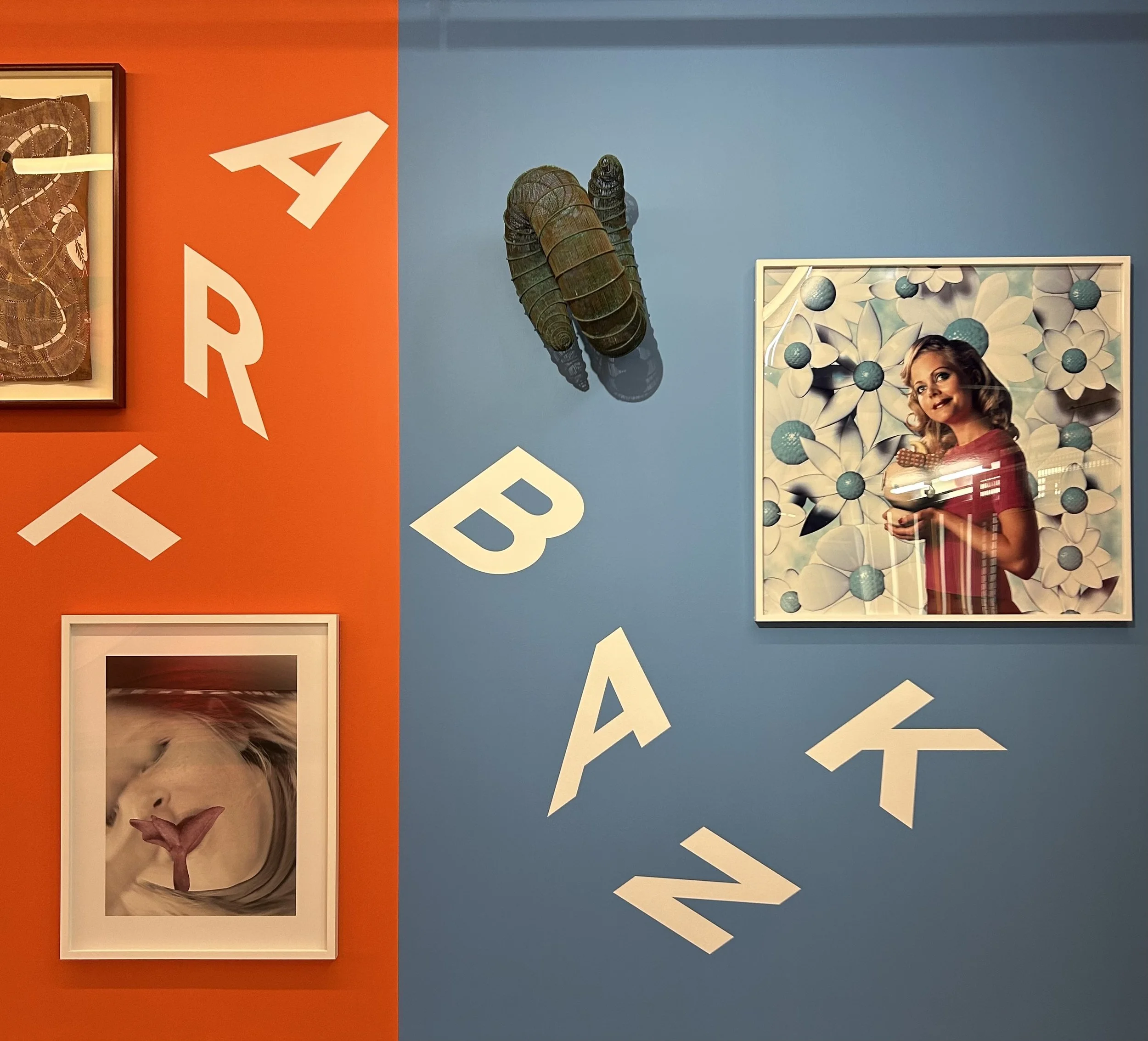
Left to right by: John Mawurndujul Pat Bassington, Bronwyn Oliver, Patricia Piccinini
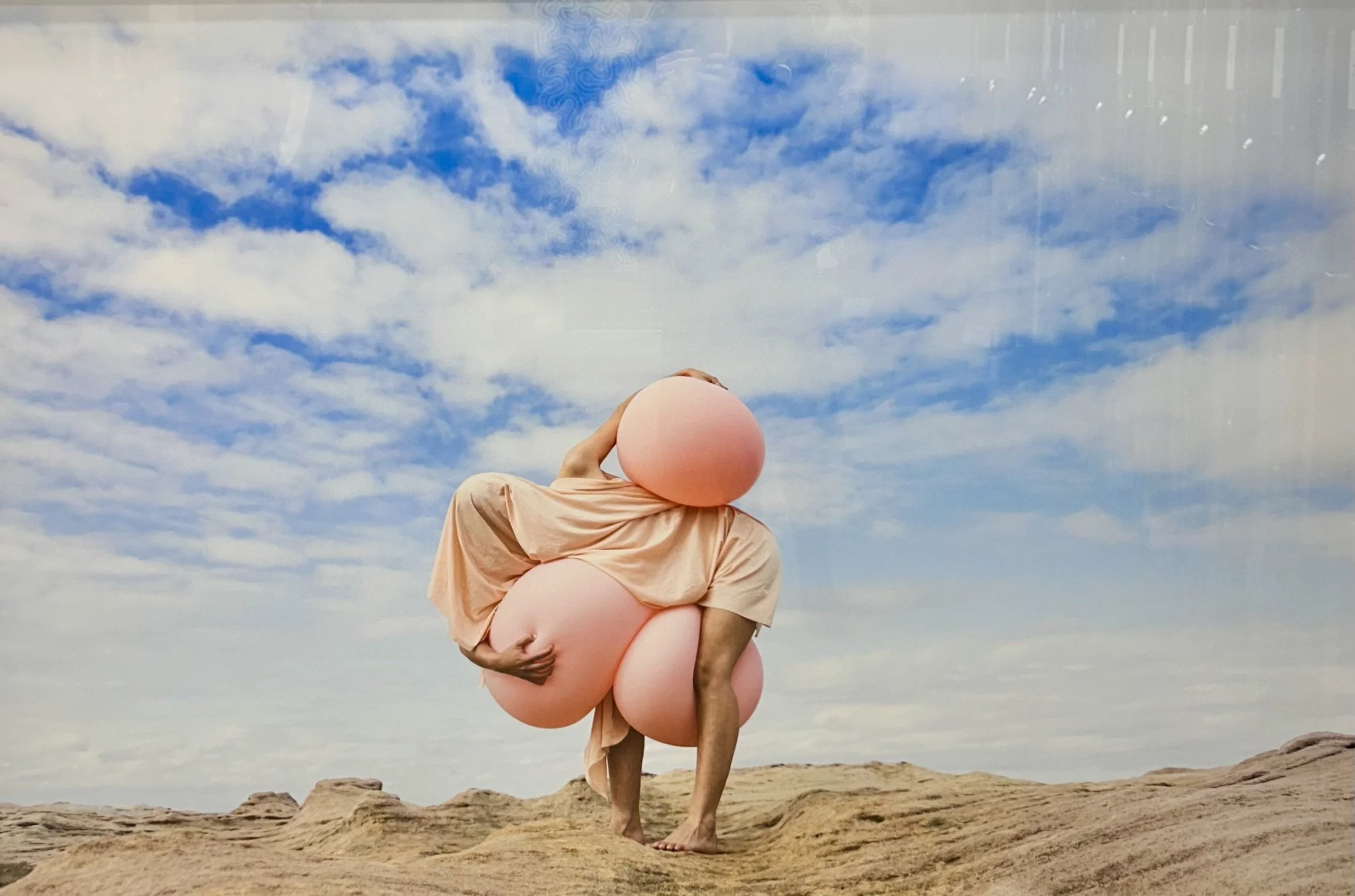
Honey Long: Body Orbit 2015
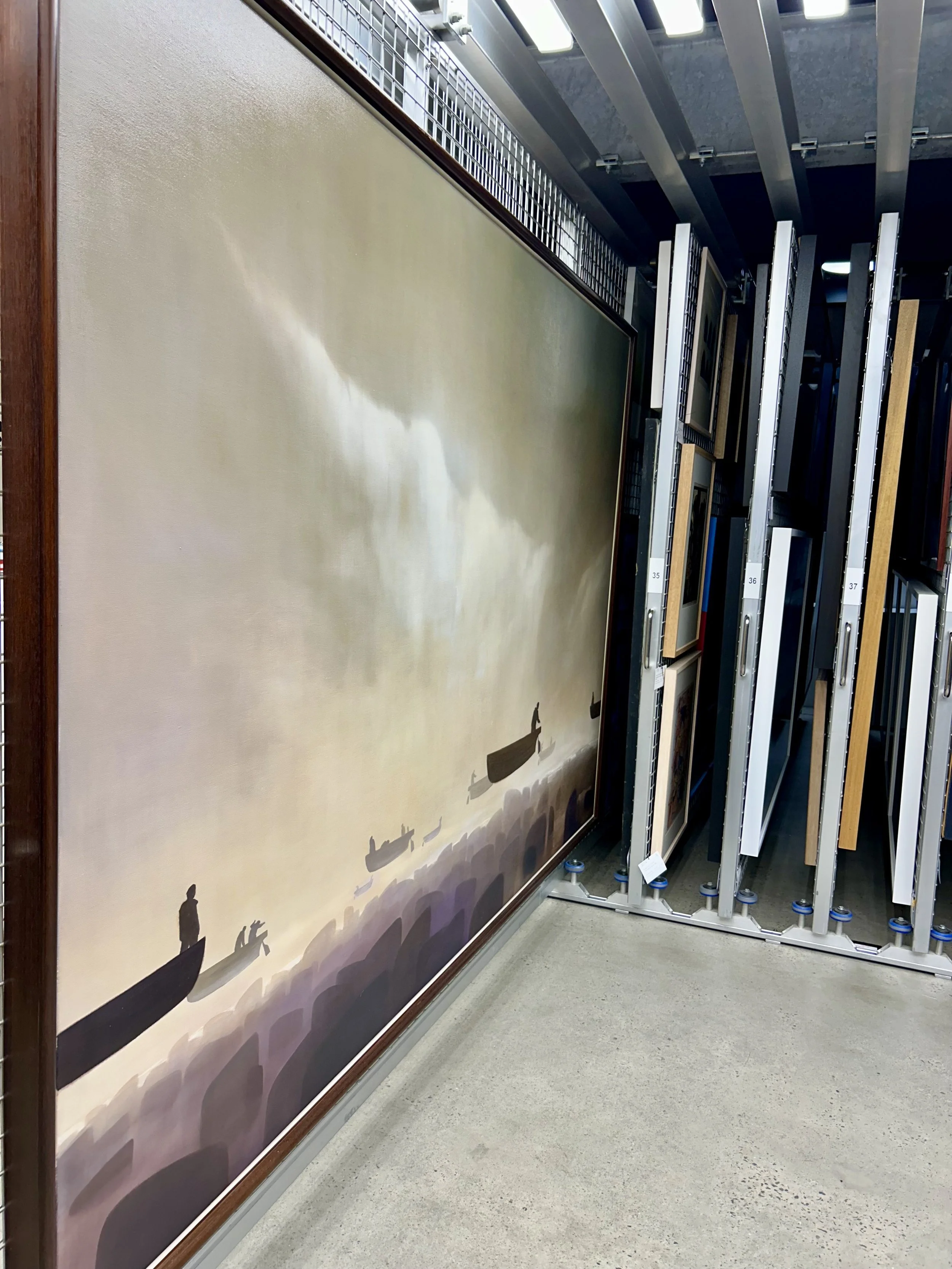
Graeme Altmann: Low Tide II
During Melbourne’s Open House 2025 I was like a kid in a candy store, among visitors sliding out racks of salon-hung works, all safely stored at Artbank. An exhibition continuously in motion, each rack revealed new gems. In discovering (often early) works from now renowned Indigenous and non-Indigenous Australian artists, I found myself learning a little about the institution and its ambition too.
An arm of the Australian Government Office for the Arts, Artbank has a unique way of promoting contemporary Australian artists. Artworks are curated to be enjoyed serendipitously, outside the prestige of a museum or gallery. They are leased to everyday locations, an offering to the broader public’s eye. The collection of over 10,000 works can be found in corporate offices, government buildings, private homes or — providing an accelerated path to international recognition for artists — on the walls of embassies in approximately 70 countries worldwide. Annual fees cycle from payment of one artwork, to reinvestment in the next, supporting Artbank’s expanding collection and curatorial capacity.
As a collector, Artbank has a unique emphasis on being at the frontline, seeking out emerging and mid-career artists, providing a dose of validation and exposure when it’s needed most. The curatorial team keeps their eyes peeled across primary market sources, from commercial galleries and prizes to art centres. They also wade through submissions from artists, offering a direct line to those otherwise unrepresented.
On the 8 August 2025 (until October) Artbank Melbourne’s exhibition space brought to life a 45-year anniversary exhibition. Featuring the likes of Howard Arkley, Pat Bassington, Mirdidingkingathi Juwarnda Sally Gabori and Patricia Piccinini, selected works represent the breadth of the collection that has now been compiled into a celebratory publication, launched on the night. The exhibition hints at the leg-up Artbank has given many of Australia’s now most famous internationally recognised artists, and the value in investing in arts programs through sustained, decades-long government support.
So, what will the next 45 years hold? A nod to its evolving relevance, Artbank is collaborating with Melbourne International Film Festival, with sculptural works on show at cinemas in a cross-pollination of cultural talents.
With one hand, Artbank heroes artists who may otherwise struggle to emerge in a competitive and sometimes luck-based industry. With the other, it extends the reach of art by gifting it to the public who may otherwise never think to seek it out. Harnessing art’s ability to garner boldness and empathy, Artbank’s role remains crucial in showcasing thought-provoking joys from contemporary Australian artists.

MW Wines by Maher Design
Maher Design pairs modern lines with vintage references, uplifting every joyful drop of the MW Wines experience.
Hundreds of repurposed wine boxes — broken down and mosaiced by Trentham-based instrument maker Nara Demasson — now line two tasting room walls and also make for bespoke table legs. Like an inset wine list, the evocative patchwork of timber grains and ornately burnt labels provide “a stamped history,” Maher observes, lending legacy to the modern setting.
Image: Shannon McGrath

Publisher Hardie Grant's Melbourne workplace by Carr for Interiors, Au
Hardie Grant’s new Melbourne headquarters by Carr, is designed to intuit the needs of diverse creative talents, with tailorable features supporting them to make work a home of their own.
Image: Tom Blachford

Billie Civello for Interiors, Au
Billie Civello’s crafted pieces illustrate a zeal for experimentation while also resulting in gems, made to endure timelessly.
Image: Siros Chaise, Melissa Cowan
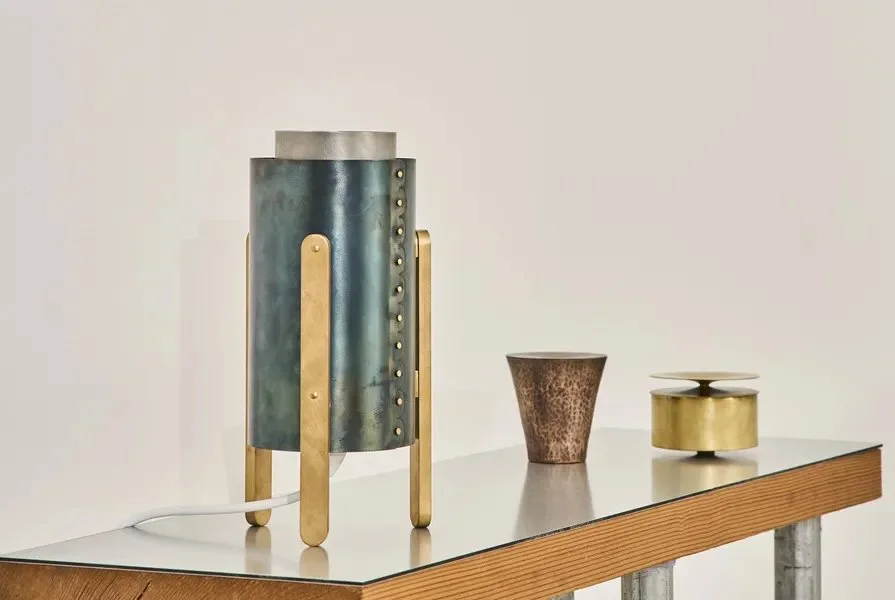
Lachlan Vasic for Interiors, Au
By embracing the expertise of others, Lachlan Vasic has crafted his own unique skillset and a body of exquisite works.
Image: by Claire Armstrong, Craft

Jess Humpston for Interiors, Au
Jess Humpston’s furniture: An ode to objects of single purpose
Jess Humpston’s timber designs extend an invitation to be used, and thus completed. In return? The bliss of interacting with objects that have been crafted precisely, yet beautifully, to do one thing truly well.
Photography: Jess Humpston

Amy Vidler for Interiors, Au
Elegance and materiality: The work of Amy Vidler
Through meditative diffusions and organic forms, Amy Vidler’s sculptural lights reveal the softer side of typically tough, structural materials.
Photography: Shannon Rose
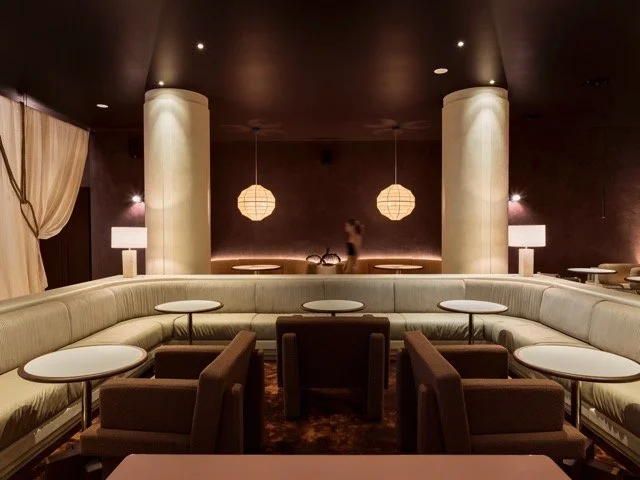
Interiors, AU: Sofitel Sydney Wentworth venues by FK
Culinary delights nestled within Australia’s renowned hotels need not be reserved only for travellers. House Made Hospitality’s four new venues at Sofitel Sydney Wentworth, designed by FK, provide elegant dining, bars and gathering spaces that invite the locals to linger too.

LEO: The first 90 years
The life story of Leo Christie OAM, covering the first 90 years in 30,000 insightful words.
"Without Caitlin‘s drive, patience and intelligent comments my story would never have been told."
Leo Christie’s life story brings together insights from his meandering and successful career, Greek heritage, enduring friendships and family life for an inspiring read that is brimming with wisdom. This document was developed with notes and resources provided by Leo, extensive interviews with him, and comprehensive research, before being edited and approved Leo.
Testimonial: "What started as a discussion after dinner one evening has turned into a lovely experience with Caitlin documenting my life story. On that evening my wife’s sister, brother-in-law, and Caitlin asked about my life, to which I spoke for about an hour and a half. To my surprise, my sister-in-law said, ‘You should document this Leo!' Subsequently, Caitlin helped me document my story. Over the years I had started to write notes about my history through various attempts. Caitlin flew from Melbourne to Sydney on several occasions to conduct further interviews and review the structure she had pieced together with my notes. During interviews my recollections were discussed expanded and thoroughly documented. Caitlin’s documentation of my story is very impressive and I have found this process a wonderful experience. I have remembered lots that thought I had forgotten: events worth mentioning that otherwise would have remained forgotten. I have very little knowledge of my father‘s past. I did not ask questions while he was with us. My advice to everyone would be to ask your parents or other living relatives questions about your family's past which will be forgotten unless documented. Without Caitlin‘s drive, patience and intelligent comments my story would never have been told.”
Leo’s life story was developed into a 60-page document detailing the first 90 years of his life, accompanied by relevant photography. If you have a life story you would like told, I have various approaches and can tailor the process to your needs and budget.

Interiors, AU: Walker Street Precinct
Brimming with elegant flair, four new venues, designed by Cox Architecture with H&E Architects, cultivate a culinary neighbourhood for North Sydney. Quoting British designer and restaurateur, Sir Terence Conran, Brooke Lloyd shared, “design is 98% common sense and 2% something really special. The 2% is what makes a design demonstrably better. We worked really hard on the 2% for these venues to create that magical feeling.”
Photography: Alec Bruce Mason

Self-portrait
Is the compact mirror a tool for keeping what we see in check, or checking in on how we see ourselves?
Many things occur in front of our eyes, yet we do not see them. Every month or so the skin sheds a scale and another cell takes its place. The body continually patches itself up — a conservator working 24/7 with the tiniest paintbrush. The compact mirror (of the pocket-sized variety that doesn’t bother with pressed powder) reflects this evolving body of work and the reflection poses a question: is the compact mirror a tool for keeping what we see in check, or checking in on how we see ourselves?
Mirrors are nothing new. Some of the first are said to have been crafted out of volcanic glass over 8000 years ago[1].
The compact mirror, however, was popularised in the early 1900s as a convenient sidekick to mass-manufactured makeup[2]. Enclosed in ornate metal casings these hand-held pieces could last a lifetime, before the introduction of plastic packaging saw the compact mirror turn from inherited relic to disposable junk. More recently the compact mirror has been sent down the stream of redundancy by smartphones. But to write it off entirely is to recognise only one function the little mirror has to offer. Its other purposes, today, are anything but superfluous.
In 8AD the poet Ovid published the story of Narcissus — a beautiful youth predicted to live a joyous life, so long as he never recognised himself[3]. While hunting, his thirst drives him to water. He comes across his reflection in a still pool and becomes besotted. But the reflection disappears if he tries to touch it, forever out of reach. Trapped by his own beauty, grief ravages his life. Traditionally, the cautionary tale perhaps hinted that we ought to tread carefully on the blurry line between self-reflection and self-absorption while glancing into any mirror, let alone a conveniently available compact.
Today, however, it’s so rarely just one reflection. Today, we’re perpetually shared, watched and visible. So often the eyes of others are the reflective surface. My childhood was spent in a dress-up box, gleefully in awe of the transformations I achieved. Then, a teenager in my first bikini, I was called Pamela Anderson by boys just as young and inexperienced. Despite the empowerment Anderson inspires today, at the time these spattered slurs were designed as something between flirtation and insult, and intent aside, they marked the arrival of a fully-fledged self-consciousness. The mirror reflected not what I could see, but what I thought others might uncover. The compact mirror became a tool for minute inspection of a chain of bodily events. It witnessed every acne pustule, hair of hirsutism, and the butterfly effects of hormonal treatments where one catalysed the need for another. Later, I realised I was plucking and preening in the hope of reaching a static physical state that is at odds with the nature of an ever-evolving body.
Enter today’s compact mirror. Its role marks the threshold between a private sense of self and social obligation. For anyone, but particularly those who enjoy the pleasure of playful self-expression, it’s likely that interactions with others will involve watching them make a snap judgement of you — am I emboldened or enviously threatened by this person? — they will ask themselves with a glance. As internal emotions slip and slide during these public moments, the compact mirror protects a private gaze and reassurance, beyond what a smartphone camera can offer: it’s something offline and un-shareable, a miniature shield.
Sometimes the worst critic appears in the compact mirror. Then what? If the body is changing anyway, why not adapt and mould with the tools at hand for those abundantly resourced? Filler, surgery, makeup. Why not bolster confidence? Perhaps the question is: to what end? Without an answer, the search for an enduring visual identity could feel like catching smoke. A compact mirror can aid, judgement-free, this personal decision-making.
Herald the intimate sanctuary the compact mirror offers, because sight isn’t a given, but a privilege and so is seeing oneself. Whether checking teeth for vivid specks of lipstick, or propping a knee on bended elbow to check out wonderous pleasure parts, to checking the tendrils of purple veins spidering over weightbearing shoulders …check, check, check. From Celine’s luxury to Charles Mallory’s frivolity and Chanel’s utility, given the chance, this humble tool holds gems beyond convenience. In today’s digital world where we’re our own PR agents, the compact can teach us as much about self-expression as grounding introspection.
Dig the compact mirror out from the back of the makeup bag, scrape off the flecks of crusty concealer and give it the renaissance it deserves. Keep it to hand. Swiftly flipped out of a slung bag in a spare second, it’s an ally. The compact mirror opens a portal that’s less about keeping the body in check, than checking in with it – inviting us to master our own self-portrait.
[1] Pub Med: History of mirrors dating back 8000 years
[2] American Popular Culture: About Face
[3] The Conversation: Who was Narcissus?

HABITUS LIVING MAGAZINE: #59 CORYMBIA
Subtle ceremony…Recurrent in Abernethy’s design is an inventive use of volume and double-height scales that deliver a unique rhythm. Oscillating between compression and expansion – through rich historical detailing and uplifting layers that build from cabinetry to window heights – the home eventually peaks where the rafters meet.
A Project Profile: March 2024
Architect: Karen Abernethy
Photography: Tom Ross
Traditional custodians: Wurundjeri People

HABITUS LIVING ONLINE: THE BEGUILING JOY OF ATONG ATEM’S PORTRAITURE
Atong Atem considers photographers cyborgs. “The camera becomes an extension of their body, movements, height, choice of angle.” The invitation and joy of her work, she surmises, comes from recognising the photographer’s intervention between what is captured and the truth of things.
Artist Profile: March 2022
Image: Atong Atem ‘A yellow dress, a bouquet 4‘, 2022, Art Gallery of New South Wales, La Prairie Art Award 2022 © Atong Atem

HABITUS LIVING ONLINE: MCPHAIL HOUSE
The design of a new extension at McPhail House doesn’t harshly define a beginning and end to the home’s chapters; rather it runs on its own harmonious continuum, along the connected interior views and sweeping curves of bespoke finishes.
A Project Profile: October 2023
Photography: Tatjana Plitt

I took for granted
I took for granted
The chair that carries me,
The chair that carries me,
ripped, worn and torn,
making space for that
which weighs on me.
This chair in the dust
of an unloved home
endures — just.
The same chair,
with the same
wear and tear,
in a loved space
pays tribute to
every bodily ache
and peaceful nap
it’s nursed.
My back reclines
into the nook you
keep indented
just for me.
Arms spoon mine
waist to thighs —
encased.
At ease up against
those there
for the long haul
bearing me with
unconditional embrace.

HABITUS LIVING ONLINE: KONINI KITCHEN
Aesthetically beautiful, Konini Kitchen has also been crafted with a humility that takes kindly to a little mess, a dish left on a bench, evidence of the movement and life that will see it wear authentically, bettered by every use.
A Project Profile: August 2023
Photography: Greta Van Der Star

HABITUS LIVING ONLINE: WARR FERRINGTON
Undisrupted views pass through Warr Ferrington, folding into one another.
A Project Profile: June 2023
Photography: Victor Vieaux
The Second Woman - Louise Mey, Translated from French by Louise Rogers Lalaurie
A psychological thriller that shows ‘just leave’ is hardly that simple. This book digs in under the skin and lodges itself in the gut – tying knots and clawing at the lungs, zapping the breath out of you.

Cover design by Louise Cand
This book digs in under the skin and lodges itself in the gut – tying knots and clawing at the lungs, zapping the breath out of you. This is why I’m not sure ‘recommend’ is the right word, but it is undoubtedly a powerful read. The Second Woman is an uncomfortable book to sit with because it gives a face and tone to something generally rendered invisible—hidden behind closed doors or in the yellowing of a mark on a cheek—domestic abuse. The story is told from inside Sandrine’s mind. There’s chaos in there, thoughts that disobey and climb their way aggressively to the front of the queue as she goes about her day-to-day ‘stupid, fat, ugly, bitch’ interjects like a car horn as she silently performs the most mundane rituals like making the morning coffee or doing washing. It’s almost as though the action of having these thoughts has become as much of a part of the ritual as her daily tasks. It is quickly clear that she is someone who does not like herself. Someone who has been told for some time now that she’s not worth it — she is the Second Woman.
The story starts in the present day when Sandrine’s partner is watching TV. His face is drained and gaunt because a woman, who has completely lost her memory, has appeared on the news, someone he thought had ‘disappeared’. The First Woman. As the story unfolds, we find out, detecting alongside police, what has happened to the First Woman. But Mey also delves into Sandrine’s life and history through her thought patterns, demonstrating how we can be held captive to thoughts that others planted in us, even from childhood. These thoughts give an impression of her life with her parents and the way freedom can also feel like despairing loneliness. When someone is abused at home in adulthood and isn’t being shackled physically, often people wonder why they don’t ‘just leave’. Mey unpicks why. The book layers emotional circumstances that cumulatively make leaving difficult. It shows how easily a mind can be moulded and how much it will sacrifice when it craves intimacy, love and security.
While this is fictional, Mey notes at the end of the novel that alarmingly ‘in the UK almost one in three women aged 16-59 will experience domestic abuse in her lifetime’. The Australian Institute of Health and Welfare data from 2016 states that 20% of the population reported ‘experiencing physical and/or sexual family and domestic violence since the age of 15.’ The figures for women are higher, and this statistic only reflects those who have reported it. Although there are significant doses of angst and cruelty throughout the book, and it does make you grateful for the little freedoms one might take for granted, this is also a story of resilience that shows just as you can fall easily into the hands of the wrong people, serendipitously it’s entirely possible to rebuild a life, albeit with scars, with good people. Trust isn’t a completely fruitless exercise; it’s just about having had the luck to establish self-confidence and self-love, before working out who is worthy of your trust.

HABITUS LIVING ONLINE: CYPRESS CREATES ELEGANT SPACES OUT OF THINK AIR
Cypreś exemplifies that creating quality space doesn’t rely on an expansive floorplan — far more important is an ability to rethink the structure of home in a way that makes use of spaces that would otherwise be lost.
A Project Profile: April 2023
Photography: Brock Beazley Photography